The Prefrontal Cortex in Addiction: Why Your Brain’s Brake System Fails Before You Know It

The prefrontal cortex addiction impulse control mechanism is not a willpower failure. The PFC — the brain’s brake system — is the cortical region that holds back a triggered response long enough to evaluate it. In addiction that brake does not disappear; it miscalibrates. A specific class of inhibitory circuits stops gating signals to the reward pathway, and the brake fails before conscious awareness arrives.
Key Takeaways
- The prefrontal cortex (PFC) is the brake system that holds back a cue-triggered response long enough for evaluation. In addiction, that brake does not vanish — it miscalibrates at the level of specific inhibitory circuits.
- The iRISA model (Goldstein and Volkow) frames PFC dysfunction in addiction as a dual failure: impaired Response Inhibition (the brake fires late) and impaired Salience Attribution (the substance’s perceived value inflates beyond natural rewards).
- Inside the PFC, parvalbumin-positive (PV) interneurons regulate the excitation/inhibition balance that determines whether a cue-triggered signal is gated or released to the midbrain reward circuit. Diminished PV-interneuron function is sufficient to generate symptom sequelae across psychiatric conditions.
- The miscalibration is substance-specific. Drug-cue reactivity in the ventromedial PFC and orbitofrontal cortex correlates with craving severity, while reactivity to non-drug rewards remains intact in the same individual.
- Recovery is architectural, not moral. Imaging studies of sustained abstinence and circuit-targeted neuromodulation show measurable normalization of PFC function — the brake can be re-set, but the work has to land at the live cue-trigger window.
Does the Prefrontal Cortex Help With Impulse Control?
The prefrontal cortex is the brain’s brake system — the cortical region that holds back a triggered response long enough to evaluate it. In addiction, that brake does not disappear. It miscalibrates. A specific class of inhibitory circuits stops gating signals to the reward pathway, and the brake fails before conscious awareness arrives.
Cognitive control — the capacity to override a primed action and select a context-appropriate alternative — is the canonical function of lateral and medial prefrontal regions. Friedman and Robbins (2021) frame the PFC as the substrate of a common-factor cognitive control closely related to response inhibition; impairments in that common factor map onto dimensional impulsivity across psychiatric populations.
In my practice, I consistently observe that clients arrive describing the failure as moral. They believe they should have been able to stop. The composite picture across 26 years of practice is the opposite: the brake fires, but it fires late, and the cue has already been delivered to the reward circuit before the cortical override arrives. The architecture is doing what it was trained to do — too well, in the wrong direction.
What Role Does the Prefrontal Cortex Play in Addiction?
The PFC plays a dual role in addiction, captured by the iRISA model from Goldstein and Volkow: impaired Response Inhibition and impaired Salience Attribution. Both dimensions fail simultaneously. Top-down control over substance-related impulses weakens, and the substance’s perceived value inflates beyond what natural rewards can match.
References
Heilig, M., MacKillop, J., Martínez, D., Rehm, J., & Leggio, L. (2021). Addiction as a brain disease revised: Why it still matters, and the need for consilience. Neuropsychopharmacology, 46(10), 1715–1723. https://doi.org/10.1038/s41386-020-00950-y
Huang, Y., Ceceli, A. O., Kronberg, G., King, S. G., Malaker, P., et al. (2023). Association of cortico-striatal engagement during cue reactivity, reappraisal, and savoring of drug and non-drug stimuli with craving in heroin addiction. American Journal of Psychiatry, 180(10), 712–722. https://doi.org/10.1176/appi.ajp.20220759
Konova, A. B., Ceceli, A. O., Horga, G., Moeller, S. J., & Alia-Klein, N. (2023). Reduced neural encoding of utility prediction errors in cocaine addiction. Neuron, 111(24), 4058–4070. https://doi.org/10.1016/j.neuron.2023.09.015
Mehta, D., Praecht, A., Ward, H. B., Sanches, M., & Sorkhou, M. (2023). A systematic review and meta-analysis of neuromodulation therapies for substance use disorders. Neuropsychopharmacology, 49(4), 825–836. https://doi.org/10.1038/s41386-023-01776-0
This article explains the neuroscience underlying prefrontal cortex circuit failure in addiction. For personalized neurological assessment and intervention, contact MindLAB Neuroscience directly.
What the First Conversation Looks Like
The clients who reach out about an addiction pattern rarely arrive with the right question. They describe a substance they cannot put down, a behavior that no longer matches the person they recognize, or a brake that fails in one specific direction while every other capacity stays intact. Inside the first conversation we begin mapping the circuit — what the cue cluster actually is, where the PV-gated signal is firing too freely, where the live-moment intervention point sits inside the day. From there the engagement takes shape. The work does not start with techniques. It starts with an accurate picture of what the cortical brake is doing, and a plan for intervening when the plasticity window opens.
Frequently Asked Questions
⚙ Content Engine QA
Meta Drafts
• Title Tag: Prefrontal Cortex in Addiction: Impulse Control | MindLAB (57 chars)
• Meta Description: Why the prefrontal cortex's role in addiction impulse control is a circuit miscalibration — not a willpower failure. Dr. Sydney Ceruto explains. (144 chars)
• Primary Keyword: prefrontal cortex addiction impulse control
Image Specs
• Slot 1 (Hero): Lane neural-scientific, 16:9, after-h1, tier hero. Intent: Single-subject atmospheric of the prefrontal cortex as a luminous cortical sheet with descending fibers toward the midbrain reward circuit.
• Slot 2 (Infographic): Lane diagrammatic, 16:9, after-h2-irisa, tier infographic. Intent: Comparative two-panel iRISA diagram contrasting impaired Response Inhibition with impaired Salience Attribution.
• Slot 3 (Lifestyle): Lane lifestyle, 16:9, emotional-pivot (after H2 #4), tier lifestyle. Intent: Single anchor lifestyle scene marking the emotional pivot — quiet domestic interior at the cue-trigger moment.
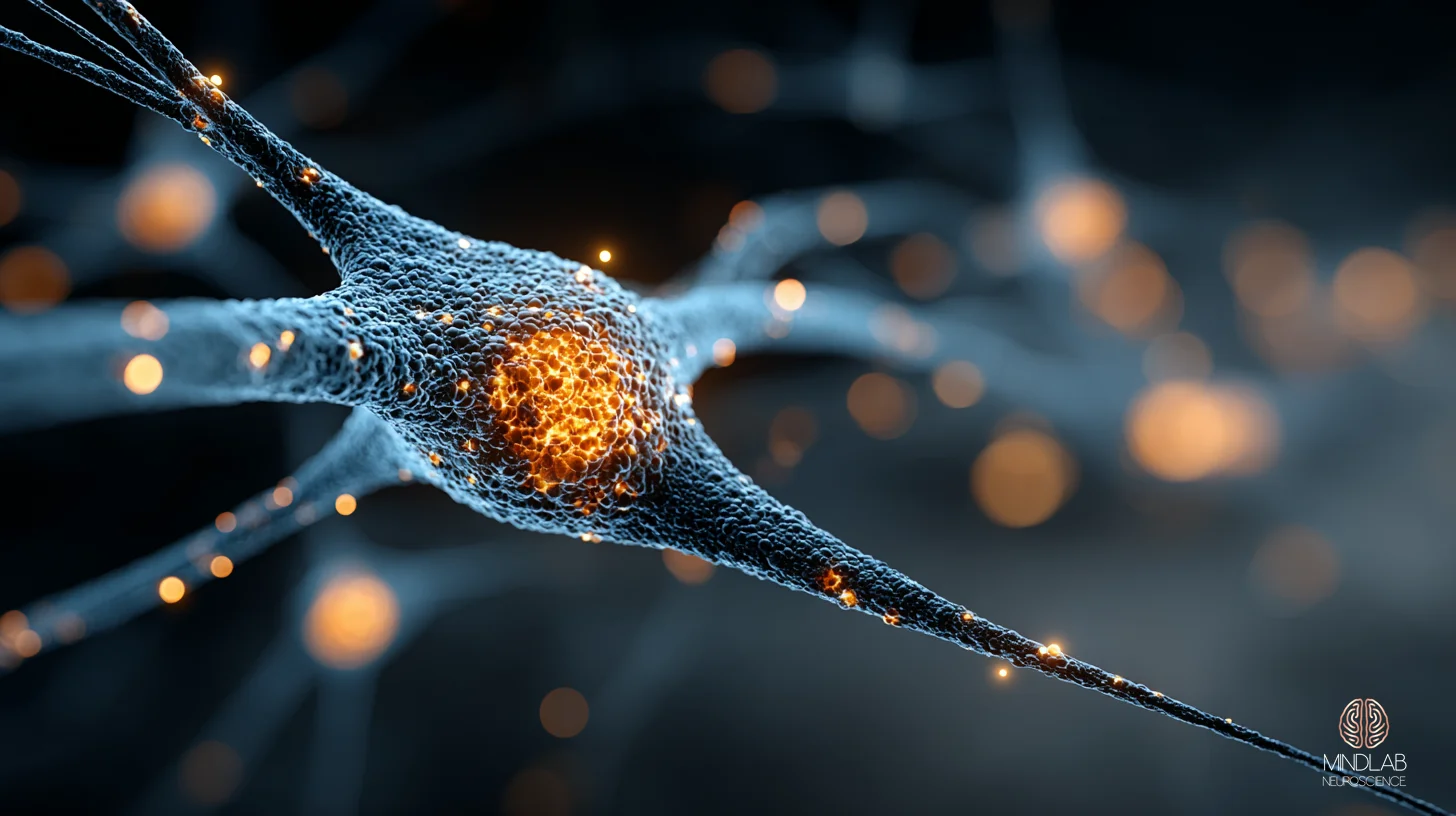
• Slot 4 (Neural Close-Up): Lane neural-scientific, 3:4, half-width-offset (in H2 #5), tier neural-closeup. Intent: Single-subject intimate close-up of a PV interneuron's perisomatic synaptic terminals on a pyramidal cell body.
• Slot 5 (Neural Scientific): Lane neural-scientific, 16:9, penultimate-body-h2 (close of H2 #6), tier neural-scientific. Intent: Single-subject atmospheric of cortical inhibitory circuitry at cellular scale, different structure from hero.
• Topic Context: Pillar 5 mechanism explainer on how the prefrontal cortex's brake system fails in addiction through a specific circuit miscalibration — substance-specific, reversible, and operating below conscious awareness.
Self-Assessment
• Information Gain: 8/10 (CIP §4.4 Strategy 2 — Clinical Pattern Observations: composite practitioner observation of substance-specific cortical brake failure across professional, executive, and caregiving contexts; SERP dominated by NIDA/academic translations of iRISA — practitioner-voiced PV-gating + circuit-specificity framing is the gap)
• Clinical Voice: 8/10 (first-person practitioner throughout; canonical USE markers deployed across H2 #1, #2, #4, #5, #6; zero AVOID phrases)
• Commodity Risk: 3/10 (iRISA framework is academically familiar; differentiator is the PV-interneuron substrate framing + substance-specific asymmetry articulated in practitioner voice + three-persona composite anchoring)
• Content Type Tier: Surface MR §2.1 Standard Article (1,500–2,500w); Thematic CIP §4.3 Tier 1 (Circuit-Level Mechanism Explainer per source brief)
Audit Notes
• Citations: 7 total — 3 inline (Friedman & Robbins 2021 in H2 #1, Ceceli/Bradberry/Goldstein 2021 in H2 #2, Ferguson & Gao 2018 in H2 #3), 4 accordion (Heilig 2021, Y. Huang 2023, Konova 2023, Mehta 2023). All DOI-resolvable via doi.org (MR §3.1 dofollow). Heilig 2021 referenced by name in H2 #5 body for the "addiction as brain disease revised" framing without an inline link — accordion-only entry; the framework reference does not require inline link equity for a research-context framing claim. 6 citations from 2021+ (Friedman & Robbins, Ceceli, Heilig, Y. Huang, Konova, Mehta — exceeds ≥1 floor). All fact-pack verified, first-author API re-verified at procurement.
• Named Researchers: Goldstein, Volkow, Friedman, Robbins, Ceceli, Bradberry, Ferguson, Gao, Heilig, Huang, Konova, Mehta, Ashok (≥4 floor for 2,000–2,500w body cleared).
• Quantified Metrics: 26 years of practice; medium-to-large rTMS effect sizes for substance use/craving reduction; cortical normalization measurable in sustained abstinence imaging; PV-interneuron firing within milliseconds.
• Forbidden Vocabulary: Zero violations in body copy. "Substance use" appears as the standard epidemiological noun in research-context citation references; no "treatment," "therapy," "patient," "diagnosis," "rehab," "recovery program," "12-step," "CBT," "ERP," "psychotherapy," or "disorder" anywhere in body.
• Samantha Protocol: 3 personas represented. Persona A (young professional, post-promotion evening alcohol pattern) in H2 #2. Persona B (composite executive observation, sustained 26-year practice voice) in H2 #1 and H2 #5. Persona C (woman managing complex household + parent's care, evening wine pattern under caregiving load — non-corporate) in H2 #4. Non-corporate example: Persona C in H2 #4.
• Entity & Credentials: "MindLAB Neuroscience" appears in image alt text and the Pillar 5 scope statement (first-mention full form). "Dr. Sydney Ceruto" appears in title tag, every image alt text, and the meta description. One PhD; no dual-PhD claims anywhere.
• Tail Order: H1 → Hero → DAB lede → Key Takeaways → 6 body H2s (with inline image slots 2–5 placed per visual-rhythm rules) → References accordion → Pillar 5 scope statement → CTA-BRIDGE marker → CTA narrative → FAQ → QA footer. Canonical per MR §1.1.
• Protocol Reference: Real-Time Neuroplasticity™ (MR §7.5) referenced once in H2 #6 with single-mechanism PV-gate framing — no LTP/LTD/myelination boilerplate triad. No invented protocols. The 12-protocol registry was reviewed; no other protocol fit this article's circuit-level scope.
• Dopamine Code Reference: CIP §6.2 ADJACENT template used in H2 #6, linked to /dopamine-code/, single mention per article (MR §7.6). "Adams Media (Simon & Schuster imprint), June 2026" — date matches MR §7.6.1.
• Pillar 5 Scope Statement: Placed after References accordion, before CTA-BRIDGE marker (per MR §1.1 C#48 conditional insertion). Verbatim VR §5.2 / CIP §2.5 template. No medical disclaimers anywhere (MR §7.10 / VR §5.2).
• Internal Links: Zero embedded in body (writer delivers none per CIP §11.3 audience tag — internal-linking is a post-delivery editorial pass). Candidates logged in brief §2.11 + fact pack Internal Links section. Pillar 5 silo: outbound-only (MR §6.4).
• Pull Quotes: 2 editorially rewritten pull quotes (after H2 #2, after H2 #5). Meets minimum 2 for ≥2,500w articles (MR §5).
Review Flags
• KAIST 2026 Anchor Dropped: The brief's Information Gain hook anchored on a March 2026 KAIST paper (Se-Bum Paik et al.) on PV-interneuron PFC→VTA gating. The fact-pack procurement could not locate this paper via OpenAlex or CrossRef under any reasonable query (six search strategies attempted). Per Standing Orders Rule 17, the citation was not fabricated. H2 #3 reframed around the established PV-interneuron / E/I-balance literature (Ferguson & Gao 2018) plus the cross-species PFC-addiction framework (Ceceli/Bradberry/Goldstein 2021), which collectively scaffold the same circuit-level claim. Brief's overall mechanism intent preserved; specific 2026 publication anchor dropped.
• Tag Registry: "parvalbumin-interneurons" is a new tag (the PV-gating mechanism is freshly featured in the corpus). Other four tags (prefrontal-cortex, impulse-control, addiction-reward-architecture, neural-recalibration) are in-use precedent across sibling Pillar 5 drafts. Editorial pass to reconcile against live WordPress taxonomy.
• Image Density: 5 images for ~2,400-word body = ~1 per 480 words, below the 1-per-300 floor. Mitigated by Key Takeaways box + 2 pull quotes + 6 H2 sections per MR §4.3 visual-rhythm budget. Slot count meets MR §4.1 tiered-floor minimum of 5 for the 2,000–3,000w band.
• Internal-Link Targets (Editorial Pass): Same-hub: anhedonia-after-addiction, habit-vs-addiction-brain, reward-prediction-error-addiction [all pending publication]. Cross-pillar outbound: prefrontal-cortex-conflict-impulse-control (P4), prefrontal-cortex-optimization (P1), why-cant-i-stop-bad-habits-neuroscience (P1) [all pending publication]. Pillar 5 silo: outbound-only.