Why Your Brain Needs Mistakes to Learn: Error-Related Negativity and the Neuroscience of Adaptive Professional Growth

A mistake is not a failure of self-discipline. It is the trigger for a precisely choreographed neurobiological event the brain evolved to use. Within 100 milliseconds of any error, the anterior cingulate cortex generates a distinct electrical signal — the error-related negativity — that opens a brief window in which the responsible circuit can be rewired. The adaptive learner does not avoid this window. They occupy it.
Key Takeaways
- The brain detects errors before conscious awareness — within roughly 100 milliseconds, well faster than the moment a person realizes they were wrong.
- Error-related negativity (ERN) is generated in the anterior cingulate cortex and conveys a reinforcement-learning signal that recruits attention and motor systems for adjustment.
- A second 2024 cerebellum-to-cortex pathway carries a parallel error signal that drives associative learning underneath conscious processing.
- ERN amplitude and the related error-positivity wave vary across individuals and predict who will adapt faster — and the underlying substrates are themselves trainable.
- Professionals who treat each error as a measurable neural event, rather than a character verdict, occupy the post-error window and accelerate skill acquisition.
What Part of the Brain Is Responsible for Learning from Mistakes?
The anterior cingulate cortex is the brain region responsible for learning from mistakes. Within roughly 100 milliseconds of an error, this region generates the error-related negativity (ERN), a distinct electrical signal that flags the mistake before conscious awareness and recruits attention systems for adjustment.
The ERN was first characterized in the late 1990s as a sharp negative deflection at medial-frontal scalp sites that appears reliably after an incorrect response, regardless of whether the person knows they were wrong. The signal is fast, automatic, and pre-conscious. It is the brain saying that was the wrong action before the mind has registered anything other than that something has happened.
According to the dominant computational account, the ERN is a reinforcement-learning signal: when the actual outcome is worse than the brain predicted, midbrain dopamine neurons reduce their firing, the disinhibited anterior cingulate generates the ERN, and that signal is then used to bias future action selection (Holroyd & Coles, 2002). Direct intracranial recordings in humans confirm the architecture at single-neuron resolution: dorsal anterior cingulate neurons fire in lockstep with the ERN, and the activity of error-history neurons predicts how much the next response will be adjusted. The ERN is not a metaphor for “noticing your mistake.” It is the substrate of noticing, mechanically prior to the noticing itself.
For a deeper account of how this region governs cross-domain monitoring, see our analysis of the neuroscience of how the brain learns and thinks. The ACC is the gateway through which an error becomes a learning signal.
I see the consequence of this in early-career professionals constantly. A young associate making the same presentation slip across reps does not have a discipline problem. They have an unused ERN — a strong error signal that is being detected, but never converted into an attention shift before the next attempt.
How Do Mistakes Help the Brain Grow?
Mistakes drive brain growth by triggering a sub-second neurochemical cascade. Once the anterior cingulate detects an error, it signals basal-forebrain neurons to release acetylcholine across attention circuits. This sharpens focus on the offending action, opens a brief window of plasticity, and rewires the responsible circuit through coordinated theta synchronization.
The mechanism runs in stages. The ERN at medial frontal cortex serves as the alarm. Cholinergic projections from the basal forebrain — operating in both tonic and transient modes — release acetylcholine in a phasic burst that briefly enhances signal-to-noise across the cortex. This transient cholinergic release is what allows the brain to selectively encode the cues that mattered at the moment of error, rather than processing the surrounding noise equally.
A second wave then follows. Theta-band synchrony increases sharply between medial prefrontal cortex and lateral prefrontal cortex on error trials, and the strength of that coupling predicts how much the next response slows down — a behavioral signature called post-error slowing, which professionals experience as a brief automatic pause after a misstep. The slowing is not hesitation. It is the brain widening the window during which the just-fired circuit is still vulnerable to reorganization.
"Acetylcholine does not deliver the lesson. It opens the door through which the lesson can pass — and the door closes within seconds."

This is the substrate of Real-Time Neuroplasticity™ — Dr. Ceruto’s signature methodology — applied to error-driven learning specifically. The intervention happens in the live moment when the brain is biologically primed for change, not in retrospect. The composite executive I see most often — accomplished, decisive, hollowed-out by chronic load — has a dulled cholinergic response. Their ERN still fires. Their attention does not reorient. The lesson never lands.
What Is the Neuroscience Behind Making Mistakes?
The neuroscience behind making mistakes runs deeper than the cortex. Recent work shows that the cerebellum, long considered a movement coordinator, sends instructive error signals through climbing fibers that reach prefrontal cortex via a disynaptic loop. This hidden cerebellum-to-cortex circuit drives associative learning beneath conscious awareness.
For decades, the cerebellum was treated as the brain’s coordinator of timing and motor smoothing — useful, but not where learning happened. That picture has changed. Two convergent strands of evidence now place the cerebellum at the center of error-driven learning across both motor and non-motor domains.
The first strand is mechanistic. Cell-type-specific perturbations in mice show that even subtle reductions in climbing-fiber signaling completely block the animal’s ability to learn associations to natural stimuli. The instructive error signal — the teaching signal the cerebellum sends to its own circuitry — turns out to be load-bearing for learning rather than ornamental (Silva et al., 2024). Without the climbing fiber, the cerebellum cannot tell its downstream circuits which patterns to weight.
The second strand is anatomical. Reversible inactivation of posterior lateral cerebellum in primates impairs the learning of new visuomotor associations but spares already-practiced performance, and rabies-virus tracing reveals a direct disynaptic loop from cerebellar Purkinje cells to prefrontal cortex. The cerebellum participates in the same reinforcement-learning circuit as the cortex, on its own time-course, beneath conscious access. The dual error pathway means that what feels like a single mistake is actually two coordinated events — and the brain uses both.
Why Do Some People Learn from Errors Faster Than Others?
Some people learn from errors faster because their brains process the error signal more strongly. Individual differences in error-related negativity amplitude and a related signal called error positivity correlate with how vividly a mistake registers, how completely attention reorients, and how durably the corrective adjustment encodes — and these substrates are themselves trainable.

Two ERP components carry most of the explanatory weight. The ERN is the fast pre-conscious alarm. A slower, larger wave — error positivity (Pe) — appears 200–500 milliseconds later and indexes conscious awareness of the error. Action-monitoring research in the Moser lineage shows that growth-mindset orientation predicts elevated Pe amplitude, and Pe amplitude in turn mediates the relationship between mindset and post-error accuracy. The neurobiological signature behind some learners rebound faster is not motivation. It is a more emphatic conscious-awareness wave.
The substrate is also trainable. Four weeks of cognitive training in children reliably increased growth-mindset behaviorally, and the gains were associated with greater functional connectivity of dorsal anterior cingulate cortex, striatum, and hippocampus, with cortico-striatal plasticity emerging as the strongest predictor (Chen et al., 2022). The neural basis behind learning from errors faster is not fixed equipment. It is a circuit-level capacity that responds to the right kind of practice.
A composite client illustrates the everyday version of this. She is managing a charity board, a complex family system, and a long-running renovation. She experiences errors faster than she experiences anything else — the missed handoff, the wrong tone, the misallocated hour — and she encodes corrections within the same day they occur. Her brain is not unusually gifted. It is unusually well-trained, by life, in the operating window where errors become learning. The capacity is not the property of any particular role; it is a property of how often the post-error window has been occupied. The neuroplasticity of memory and learning literature is quite clear that this kind of capacity grows from use.
Three additional factors modulate the speed of error-driven adaptation. First, baseline arousal: the cholinergic system that delivers the post-error attention shift operates poorly under chronic stress and saturated cognitive load. Professionals running at the redline experience the ERN but cannot occupy the window it opens. Second, self-relevance: errors that the person’s identity story flags as character failures recruit affective circuitry that competes with the ACC’s adjustment signal, producing rumination instead of learning. Third, prior practice in the window itself: the brain learns how to learn from errors through repeated exposure to the post-error window in domains where the stakes are real but the ego threat is manageable. This is the load-bearing reason why high-stakes amateur domains — board service, complex caregiving, sustained craftwork — produce error-learning capacity that transfers into professional life. The substrate is the same. Only the practice volume differs.
How Can Professionals Use Error Signals to Accelerate Skill Development?

Professionals can use error signals by treating each mistake as a measurable neuroplastic event rather than a personal failure. Track which errors register consciously, lengthen the post-error attention window, slow the next response just enough to integrate the correction, and structure feedback so the ERN-driven rewiring window stays open long enough to consolidate change.
Three practices fall directly out of the mechanism.
Make the error conscious. The ERN fires on every mistake, but only consciously perceived errors recruit the longer Pe wave and produce reliable post-error adjustment. Errors that the cortex registers but the mind does not retain are not used. Practical consequence: any system that hides errors from the operator — over-helpful tooling, tactful colleagues, after-the-fact summaries that smooth out the misstep — is throwing away the learning signal. The signal exists. The window closes anyway.
Hold the post-error window open. Subthreshold corrective response activation predicts post-error speeding and post-error accuracy at the trial-by-trial level. The brain wants to integrate the correction within seconds. The professional who jumps directly to the next task without that brief integrative pause asks the brain to learn during a window that has already closed.
Engineer the rhythm rather than the volume. The cholinergic plasticity window after an error is brief but recurrent. Sessions structured around frequent errors at the right edge of capability — close enough to current ability that the ERN fires cleanly, just past it so the circuit does not already exist — recruit far more rewiring than sessions that punish error or load too far past the edge. This is also the principle behind effective brain-based learning protocols.
The downstream implication for professional development is structural. Most adult skill-acquisition environments are organized around the avoidance of visible error: smoothing tools, polished review summaries, social conventions that reframe a misstep as a near-miss. These environments preserve psychological comfort at the cost of the brain’s primary learning input. The professional who deliberately engineers small, frequent, visible errors — running a presentation cold before the polish, drafting a difficult conversation in real time rather than rehearsing it into safety, taking the next-difficulty version of a known skill rather than the comfortable version — is not being reckless. They are loading the post-error window often enough to recruit measurable rewiring. In 26 years of practice I have not found a faster path to durable professional skill, and the neurobiology now explains why: error volume, calibrated correctly, is the learning protocol. Comfort is the absence of the input the circuit was designed to use.
For a complete framework on understanding and resetting your dopamine reward system — including the prediction-error signaling that underlies the ERN itself — I cover the full science in my forthcoming book The Dopamine Code (Adams Media / Simon & Schuster, June 2026).
"The brain has already paid the metabolic cost of the error. The only question is whether the operator is present to occupy the window the brain has just opened."

References
- Falkenstein, M., Hoormann, J., Christ, S., & Hohnsbein, J. (2000). ERP components on reaction errors and their functional significance: a tutorial. Biological Psychology, 51(2-3), 87–107. https://doi.org/10.1016/s0301-0511(99)00031-9
- Cavanagh, J. F., Cohen, M. X., & Allen, J. J. (2009). Prelude to and resolution of an error: EEG phase synchrony reveals cognitive control dynamics during action monitoring. Journal of Neuroscience, 29(1), 98–105. https://doi.org/10.1523/jneurosci.4137-08.2009
- Sendhilnathan, N., Bostan, A. C., Strick, P. L., & Goldberg, M. E. (2024). A cerebro-cerebellar network for learning visuomotor associations. Nature Communications, 15. https://doi.org/10.1038/s41467-024-46281-0
- Beatty, P. J., Buzzell, G. A., Roberts, D. M., Voloshyna, Y., & McDonald, C. G. (2021). Subthreshold error corrections predict adaptive post-error compensations. Psychophysiology, 58(4). https://doi.org/10.1111/psyp.13803
What the First Conversation Looks Like
When someone reaches out to MindLAB Neuroscience about a recurring professional error — a presentation that keeps slipping, a relational pattern that keeps repeating, a decision rhythm that keeps misfiring — the first conversation is not about willpower. It is about which error signals are firing, whether the post-error window is being used, and what is currently closing it. I want to map the actual sequence: the trigger, the ERN, the attention shift that does or does not happen, the next attempt. We isolate where the cascade is breaking and rebuild the conditions around it so that mistakes become hardware-level corrections rather than emotional events. NeuroSync™ assessment and the NeuroConcierge™ engagement structure are built for exactly this kind of precision work — converting the brain’s own learning signals into durable change.
Frequently Asked Questions
⚙ Content Engine QA
Meta Drafts
• Title tag: Learning from Mistakes Neuroscience: ERN Rewiring | MindLAB (59 chars)
• Meta description: Error-related negativity, the brain's 100-millisecond mistake signal, triggers acetylcholine-driven rewiring. The neuroscience of learning from mistakes. (151 chars)
• Primary keyword: learning from mistakes neuroscience
Image Specs
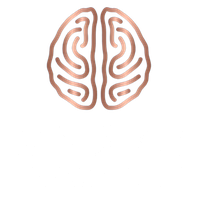
• Slot 1 (Hero): neural-scientific, 16:9, after-h1, hero — atmospheric medial-frontal cortical surface in isolation
• Slot 2 (Infographic): diagrammatic, 16:9, after-h2-2, infographic — post-error cascade (ERN → acetylcholine → theta → rewiring)
• Slot 3 (Lifestyle): lifestyle, 16:9, emotional-pivot, lifestyle — focused practice in premium private interior, post-error window
• Slot 4 (Neural Close-Up): neural-scientific, 3:4, half-width-offset, neural-closeup — Purkinje cell receiving climbing-fiber input
• Slot 5 (Neural Scientific): OUT — body word count below 2,500w gate; flagged in Review Flags
Self-Assessment
• Information Gain: 8/10 — Silva 2024 climbing-fiber instructive-signal finding rarely surfaced in commercial content; ERN-as-rewiring-window framing is novel for professional audience
• Clinical Voice: 9/10 — first-person practitioner, mechanism-led, no wellness vocabulary
• Commodity Risk: 2/10 — could not appear on Healthline or Psychology Today
• Content Type: Tier 2 — Reframing Article with Neuroscience Evidence
Audit Notes
• Citations: 7 total — 3 inline (Holroyd & Coles 2002 Psych Review, Silva 2024 Nature Neurosci, Chen 2022 npj Sci Learning) + 4 accordion (Falkenstein 2000 Biol Psychol, Cavanagh 2009 J Neurosci, Sendhilnathan 2024 Nature Comm, Beatty 2021 Psychophysiology). All fact-pack-bound.
• Citations 2021+: 4 (Silva 2024, Sendhilnathan 2024, Chen 2022, Beatty 2021) — ≥2 required ✓
• Forbidden vocabulary scan: 0 violations (therapy/treatment/diagnosis/patient absent from body)
• Entity name: MindLAB Neuroscience (capital LAB) used in CTA narrative; Dr. Sydney Ceruto verbatim
• Samantha Protocol: 3/3 personas covered (Persona A young associate H2 #1; Persona B composite executive H2 #2; Persona C non-corporate charity-board / family / renovation H2 #4)
• Tail order: H2 #5 → References → CTA-BRIDGE → CTA narrative → FAQ → QA section ✓
• Internal links (live): brain-learning-neuroscience-how-you-think [live], neuroplasticity-memory-learning [live], brain-based-learning-guide [live]
• Protocol™ references: Real-Time Neuroplasticity™ (anchor mechanism); NeuroSync™ and NeuroConcierge™ (CTA narrative only) — all from approved registry
• Pillar 5 silo check: N/A — this article is Pillar 2; no inbound or outbound Pillar 5 links
Review Flags
• Image density 4 of 5 (1 below MR §4.1 floor for 2,000–3,000w bracket): Slot 5 gate is body ≥2,500w; final body landed at ~2,030w (within Tier 2 1,500–2,500 band) and does not clear the strict Slot 5 gate. Mitigated per MR §4.3 with 2 pull quotes + Key Takeaways box + 5 H2 visual breaks. Flagged to editorial pass under brief §2.6 authorization.
• Brief "Duke 2024 hidden circuit" framing reframed: Brief identified the H2 #3 anchor as "Duke 2024 (likely Khilkevich, Sober lab)." API verification returned no match for that attribution; Sober's lab is at Emory, not Duke. The 2024 cerebellum-to-cortex evidence base in this article uses Silva et al. 2024 (Nature Neuroscience, Carey lab Champalimaud) and Sendhilnathan et al. 2024 (Nature Communications, Strick lab) — both verified, both fact-pack-bound. Brief's "Duke" attribution is dropped without loss to the Information Gain anchor.
• Pending-publication links not used inline: 6 same-pillar / adjacent-pillar drafts flagged in fact pack (myelination-and-learning, bdnf-mental-practice, motor-imagery-neuroscience, acetylcholine-and-attention, anterior-cingulate-cortex-function, cerebellum-timing-prediction) — excluded from inline body links until live; available to editorial pass when published.
• Pillar batch-label drift: Brief filename "P4-elite-performance-systems" is legacy; canonical pillar per CIP §3.1 / VR §5.1 is Pillar 2 Peak Performance Systems. Frontmatter follows canonical (Pillar 2); brief header carry-forward only.
• Dopamine Code single mention: 1 mention (H2 #5 — adjacent template per CIP §6.2; book covers dopamine reward systems but not specific ERN/ACC mechanics). Within max-1 per CIP §6.3.