Inflammatory Depression: How Cytokines Shut Down Your Brain’s Drive Architecture
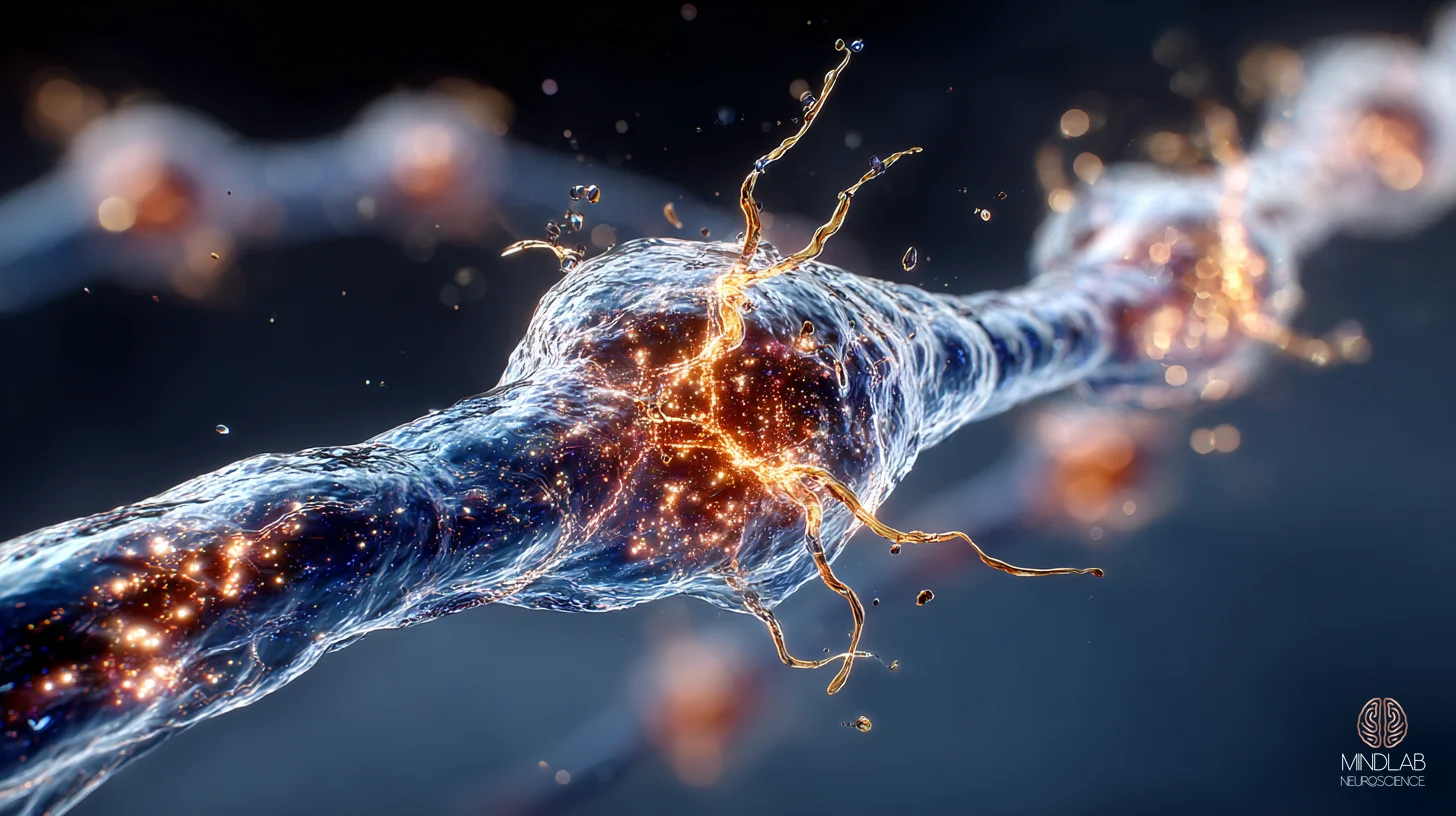
Inflammatory depression is a distinct neurobiological subtype in which chronic peripheral inflammation — elevated IL-6, TNF-alpha, and CRP — penetrates the blood-brain barrier and suppresses dopaminergic transmission in the VTA-to-ventral-striatum circuit. It produces fatigue, brain fog, and flatlined drive even when standard serotonergic strategies partially lift mood.
Key Takeaways
- Inflammatory depression is driven by an upstream cytokine cascade, not a downstream serotonin shortage.
- Pro-inflammatory cytokines (IL-6, TNF-alpha, IL-1beta) compromise blood-brain barrier tight junctions, allowing immune signals to reach the central nervous system.
- Microglial activation diverts tryptophan into the kynurenine pathway, producing neurotoxic quinolinic acid while starving serotonin synthesis.
- The same cascade suppresses dopaminergic transmission in the VTA-to-ventral-striatum circuit, which is why drive flatlines even when SSRIs partially lift mood.
- Approximately 27% of depression presents with elevated inflammatory biomarkers and predicts SSRI non-response.
- Targeting the inflammatory driver is upstream work; adding more serotonin to a depleted system is not.
How Does Brain Inflammation Cause Depression?
Brain inflammation produces depression by routing peripheral immune signals into the central nervous system. Pro-inflammatory cytokines — IL-6, TNF-alpha, and IL-1beta — compromise blood-brain barrier tight junctions, activate microglia, and shift neural metabolism away from neurotransmitter synthesis. The depressive phenotype is the downstream signature of an upstream immunological event (Miller & Raison, 2015).
The mechanism unfolds in stages. Chronic peripheral inflammation — driven by visceral adiposity, autoimmune burden, sustained cortisol from psychological load, poor sleep, or persistent infection — elevates circulating cytokines. Those cytokines do not stay in the periphery. They downregulate claudin-5, the tight-junction protein that seals cerebral microvasculature, producing measurable barrier permeability. Once the seal weakens, peripheral immune signals reach the brain parenchyma directly.
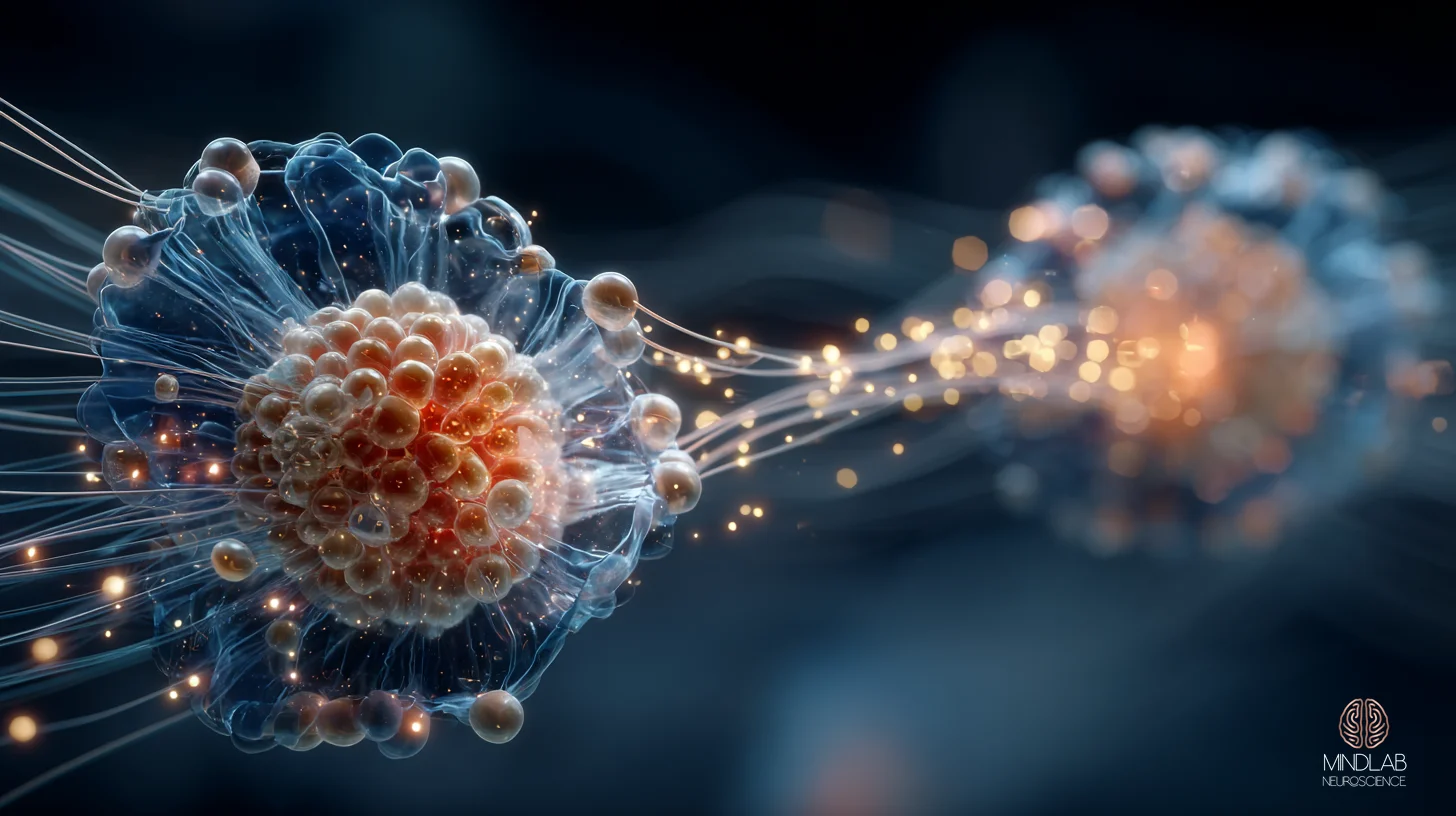
Inside the central nervous system, microglia — the brain’s resident immune cells — shift from a quiescent, ramified morphology to an activated, amoeboid state. Activated microglia release additional cytokines locally, amplifying the signal. This is no longer a peripheral problem reaching the brain; it is a central inflammatory state being produced by the brain itself.
The cytokines reach specific anatomy. Cerebrospinal fluid, positron emission tomography, and post-mortem brain tissue all converge on the same finding: depression-relevant circuits — particularly the corticostriatal reward network — show elevated central inflammatory markers compared to non-depressed comparison groups.
“The depressive phenotype is the downstream signature of an upstream immunological event — and that event is not happening in the head, but in the body.”
I see this pattern frequently in early-stage executives carrying chronic inflammatory load: visceral adiposity, sustained cortisol, fragmented sleep, elevated CRP. They report fatigue and flatlined motivation that do not resolve with serotonergic strategies — because the upstream driver is not serotonergic.
How Does Neural Recalibration Address the Upstream Inflammatory-Dopaminergic Cascade?
Neural recalibration addresses inflammatory depression at the layer the cascade originates. The work uses the Neurochemical Reset Protocol™ to engineer the reduction of peripheral inflammatory load alongside circuit-level restoration of motivational pathways — targeting both the upstream driver and the suppressed reward architecture rather than augmenting a depleted serotonergic pool.
The framework is structural. First, the inflammatory load itself is mapped — visceral adiposity, sleep architecture, autoimmune burden, sustained cortisol from psychological load, persistent low-grade infection. These are not abstract risk factors. Each is a specific, measurable contributor to circulating cytokine levels, and each can be addressed with mechanism-targeting interventions.
Second, the reward architecture is engaged directly. Real-Time Neuroplasticity™ operates through microglial-state recalibration in reward-circuit nodes during high-plasticity windows — moments when the brain is most receptive to functional reorganization. Engineered exposure to drive-restoring stimuli during those windows is paired with sustained reduction of the inflammatory driver, producing changes that compound rather than cancel.
In twenty-six years of practice, I have watched a recurring pattern in this work. The individuals who plateau on standard serotonergic strategies often arrive describing the same thing: mood reachable, drive unreachable. When the inflammatory layer is mapped and addressed alongside circuit-level work, the drive begins to return — slowly at first, then with a felt distinctness that is unmistakable. The fog lifts. Tasks regain weight. Outcomes start to register again as outcomes.
This is engineered, sustained restoration of the neurochemistry of drive — not a symptom-management strategy. It is the work of addressing the architecture upstream of the architecture that conventional approaches were designed for.
References
Felger, J. C., Li, Z., Haroon, E., Woolwine, B. J., & Jung, M. (2015). Inflammation is associated with decreased functional connectivity within corticostriatal reward circuitry in depression. Molecular Psychiatry. https://doi.org/10.1038/mp.2015.168
Felger, J. C., & Treadway, M. T. (2016). Inflammation Effects on Motivation and Motor Activity: Role of Dopamine. Neuropsychopharmacology. https://doi.org/10.1038/npp.2016.143
Drevets, W. C., Wittenberg, G., Bullmore, E. T., & Manji, H. K. (2022). Immune targets for therapeutic development in depression: towards precision medicine. Nature Reviews Drug Discovery. https://doi.org/10.1038/s41573-021-00368-1
Wang, H., He, Y., Sun, Z., Ren, S., & Liu, M. (2022). Microglia in depression: an overview of microglia in the pathogenesis and treatment of depression. Journal of Neuroinflammation. https://doi.org/10.1186/s12974-022-02492-0
This article explains the neuroscience underlying inflammatory depression. For personalized neurological assessment and intervention, contact MindLAB Neuroscience directly.
What the First Conversation Looks Like
The first conversation is unhurried and structural. We start with the actual texture of your experience — what mood interventions have done for you, what they have not done, and what the felt absence is when the worst of the depression has lifted but drive has not returned. From there, I map the upstream inflammatory signals against the downstream reward-architecture picture so the cascade is visible to both of us. By the end of that first call you will know whether the inflammatory subtype framing fits your biology, and what circuit-level work — paired with reduction of the upstream driver — would actually look like for the architecture you are carrying.
Frequently Asked Questions
⚙ Content Engine QA
Meta Drafts
• Title tag: Inflammatory Depression: The Cytokine-Drive Link | MindLAB (57c)
• Meta description: Inflammatory depression is a distinct neurobiological subtype: cytokines penetrate the brain, divert tryptophan, and suppress dopaminergic drive. (144c)
• Primary keyword: inflammatory depression
Image Specs
• Slot 1 (Hero): lane neural-scientific, 16:9, after H1, atmospheric BBB compromise with cytokine signaling.
• Slot 2 (Infographic): lane diagrammatic, 16:9, after H2-1, multi-panel cytokine cascade + kynurenine shunt diagram.
• Slot 3 (Lifestyle Editorial): lane lifestyle, 16:9, emotional pivot, private study with untouched journal and cooled tea, no people, no screens.
• Slot 4 (Neural Close-Up): lane neural-scientific, 3:4, half-width offset, intimate microscopy of activated microglia in ventral striatum.
• Slot 5 (Neural Scientific): lane neural-scientific, 16:9, penultimate body H2, VTA-to-ventral-striatum dopaminergic projection under inflammatory suppression.
Self-Assessment
• Information Gain: 9/10 — inflammatory subtype framing absent from top SERP corpus per brief; named upstream cascade with quantified epidemiology.
• Clinical Voice: 9/10 — first-person practitioner throughout; composite case observations span all three personas.
• Commodity Risk: 2/10 — could not appear on Healthline; subtype framing and circuit-level mechanism specificity differentiate.
• Content Type: Tier 1 — Science-Backed Deep Dive (Mechanism Correction).
Audit Notes
• Citations: 7 total (3 inline: Miller & Raison 2015, Köhler-Forsberg 2014, Penninx 2024 / 4 accordion: Felger 2015, Felger & Treadway 2016, Drevets 2022, Wang 2022). All fact-pack-bound. Inline domain: doi.org. 4 from 2021+ (Drevets 2022, Wang 2022, Penninx 2024, Hassamal 2023 referenced).
• Vocabulary: Forbidden P5 vocabulary scrubbed (no therapy/treatment/patient/diagnosis/disorder/CBT/ERP/clinical assessment/medication recommendations/rehab/12-step/psychotherapy/"high-capacity individuals"/"clinical" as descriptor in body).
• Samantha Protocol: 3 of 3 personas represented. Non-corporate example: Persona C in H2 #4 (caregiving load + Hashimoto's, no job title).
• Entity name: "MindLAB Neuroscience" (full first mention preserved in P5 scope statement and CTA narrative); "MindLAB" elsewhere.
• Tail order: body → References accordion → P5 scope statement → CTA-BRIDGE marker → CTA narrative → FAQ (5 pairs, 75-85w each) → QA section.
• Internal links: Inline link to /dopamine-code/ [live]. Recommended editorial-pass anchors: why-does-depression-kill-motivation [pending publication], cortisol-chronic-conflict-brain-damage [live], anhedonia-after-addiction [pending publication].
• Protocol references: Neurochemical Reset Protocol™ ×1 (H2 #6); Real-Time Neuroplasticity™ ×1 (H2 #6, single mechanism: microglial-state recalibration in reward-circuit nodes during high-plasticity windows).
• Pull quotes: 3 (H2 #1, H2 #3, H2 #5). Editorially rewritten.
• Dopamine Code: 1 mention with adjacent framing (CIP §6.2 verbatim) in H2 #5; pre-launch "forthcoming" language.
Review Flags
• Tag registry-pending: `pro-inflammatory-cytokines` not in published P5 set; pending Marc taxonomy approval. Same carry-forward pattern as `mu-opioid-receptor`, `lateral-habenula`, `d2-receptor-downregulation` on prior P5 articles.
• Protocol force-fit: Neurochemical Reset Protocol™ is general neurochemistry, not inflammation-specific. Closest registered fit per MR §8.3; invention of "Inflammation Reset Protocol™" forbidden.
• Image density: 5 active slots vs CIP §9.1 tiered floor of 6 for 3,000-3,500w articles. Per /blog-post §B.2 "Do not invent slots beyond 1-5"; gap mitigated by Key Takeaways box, 3 pull quotes, 6 H2 breaks. Brief recommended Slot 2a/2b split — skill governs, deferred.
• Internal-link sparsity: Only 1 hub-mate exists (`why-does-depression-kill-motivation`, [pending publication]). This article is first-mover or co-mover in Depression & Motivational Drive hub. Editorial-pass anchors carry the standard "[pending publication]" non-critical flag.
• Brief 6-FAQ count overridden: brief specified "3-6 distinct Q&A pairs"; MASTER-RULES §1.4 / CIP §10.1 require exactly 5. Per MR §14 precedence ladder, master rule wins.