Default Mode Network Rumination: Why Your Brain Won’t Stop Replaying Emotional Events
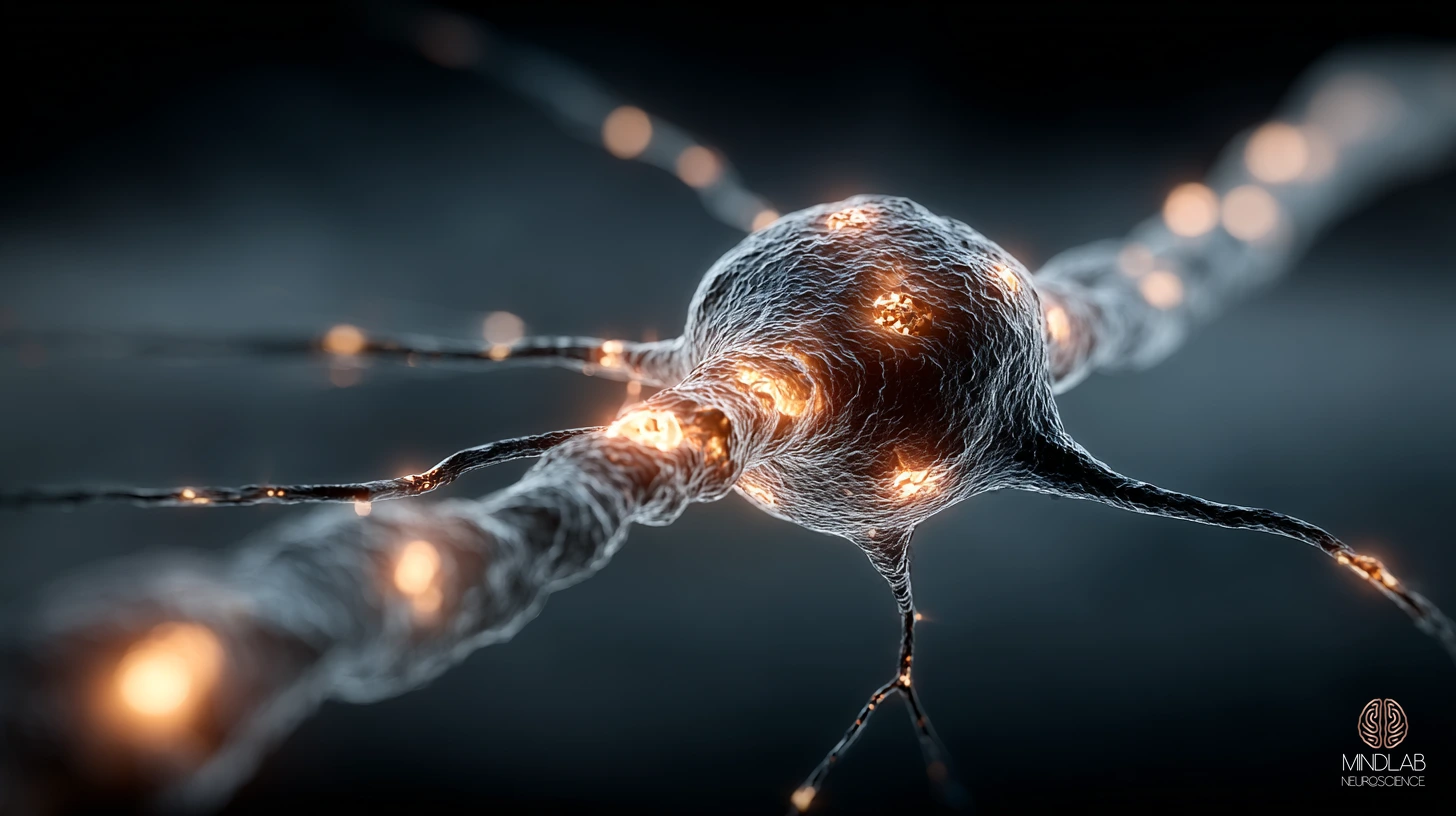
Default mode network rumination is the neural pattern in which the brain’s resting-state network — anchored in the medial prefrontal cortex, posterior cingulate, and subgenual region — locks onto self-referential negative content and fails to disengage. Hyperconnectivity within this circuit, not weak willpower, drives sustained emotional replay.
Key Takeaways
- The default mode network (DMN) activates during inward attention — and in rumination, it activates too easily and switches off too slowly.
- DMN-subgenual prefrontal cortex hyperconnectivity is the structural signature of stuck self-referential processing in depressive and ruminative behavioral patterns.
- DMN-amygdala coupling routes attention preferentially to threat-tagged memories, which is why the brain replays the bad call rather than the good one.
- The salience network — anterior insula, dorsal anterior cingulate — is the switch that breaks the loop. When it functions, attention disengages from rumination; when it does not, the loop runs.
- Distraction temporarily suppresses DMN activity but does not rewire connectivity. Lasting change requires training the salience network to switch under live load.
Can the Default Mode Network Be Too Active?
Yes — the default mode network can be hyperactive and hyperconnected, particularly between its midline nodes and the subgenual prefrontal cortex. Hamilton and colleagues (2015) characterized this state as the “dark matter” of clinical neuroscience: a temporally sticky internal-attention pattern that dominates when external focus should take over.
The DMN is a coordinated set of brain regions that activates during inward attention. Its core nodes include the medial prefrontal cortex, the posterior cingulate cortex, the inferior parietal lobule, and the subgenual prefrontal cortex. When the DMN runs at appropriate levels, it supports autobiographical memory, future projection, and self-referential processing — useful capacities. The problem is not the network itself.
The problem is temporal stickiness.
In a healthy brain, the DMN pulses on and off as attentional context shifts. External focus arrives, and the DMN dims. Internal monitoring resumes, and the DMN brightens. In depressive and ruminative presentations, this dynamic flexibility breaks down — the DMN does not simply run more often, it runs in patterns that resist disengagement. The connectivity is not just elevated; it is stuck.
Hyperconnectivity is the precise structural signature. The midline DMN nodes form unusually strong functional links with the subgenual prefrontal cortex — a small region beneath the genu of the corpus callosum that integrates emotional valence with self-referential processing. When this link strengthens beyond normal range, the architecture optimizes for one specific output: sustained replay of emotionally weighted personal content.
In my practice, I consistently observe that clients who describe themselves as “stuck in their head” do not have a thinking problem. They have a switching problem. The thoughts running through their default mode network are not the issue. The inability of the network to step aside when the present moment requires attention is the issue. This distinction changes the entire intervention.
Which Behavioral Patterns Show Default Mode Network Hyperconnectivity?
Default mode network hyperconnectivity appears across rumination, depression, anxiety, post-event social replay, and sustained self-criticism — patterns that share one structural signature: the brain’s internal-monitoring network locks onto negative self-referential content while the salience network fails to switch attention back to the present.
The transdiagnostic finding is consistent. Twenty years of DMN research synthesized in recent reviews describes the same circuit pattern across mood, anxiety, and post-traumatic presentations. The behaviors look different. The neural architecture underneath is structurally similar.
What does this mean for someone trying to recognize the pattern in their own life? It looks like this: the conversation that ended three hours ago is still running on a loop at two a.m. The presentation that went well overall keeps surfacing the one moment that did not. The text exchange with a sibling is still being mentally rewritten the next morning. Different surface contexts. Same underlying network behavior.
Three composite observations from my work illustrate the range. A client recovering from a career setback who cannot stop reconstructing what should have been said in the meeting. An accomplished adult navigating the aftermath of a difficult inheritance decision, replaying the same family conversation in a continuous loop. A partner who ends a hard call with an aging parent, opens a streaming app, and twenty minutes later realizes the screen is muted and the conversation is still running internally. The triggering events differ. The DMN signature does not.
"The DMN does not simply run more often. It runs in patterns that resist disengagement — the connectivity is not just elevated, it is stuck."
This is why behavioral change strategies built around external structure — schedules, accountability, productivity systems — produce limited durable improvement for ruminative patterns. The system targeted for change is not the system actually driving the behavior. Until the underlying network architecture shifts, the loop returns.

How Do You Stop the Default Mode Network from Ruminating?
You stop default mode network rumination by training salience network flexibility — the anterior insula’s capacity to detect when self-referential processing has stopped being adaptive and signal the frontoparietal control network to engage. Distraction-based approaches suppress the symptom temporarily; restoring switching capacity rewires the circuit.
The salience network is a small but pivotal architecture. Its core nodes — the anterior insula — the cortical region detecting interoceptive shifts and behavioral relevance — and the dorsal anterior cingulate cortex — function as a dynamic switch between the DMN and the frontoparietal control network. Goulden and colleagues (2014) confirmed this switching role through dynamic causal modeling: salience network activity drives the transitions between internal and external attention modes, not the other way around.
This is the rewiring target. Not the DMN itself.
When the salience network functions well, attention disengages from rumination as soon as the loop has stopped serving any adaptive purpose. When salience-network switching is impaired, the DMN runs unchecked. Most ruminative patterns are not DMN-overactivation problems; they are salience-network-switching problems. The intervention point is the switch.
This is why distraction fails as a long-term strategy. Distraction temporarily suppresses DMN activity by forcing attention onto an external stimulus. The connectivity beneath does not change. The salience network is not trained — it is bypassed. As soon as the external stimulus releases attention, the DMN returns to its previous configuration. The loop resumes. The same pattern returns the next time the original trigger appears.
Lasting change requires training the salience-network switching capacity to operate during live, high-stakes moments — not during a quiet attentional-rest hour scheduled for next Tuesday. Real-Time Neuroplasticity™ intervenes in those live moments specifically because the brain is biologically primed for connectivity change while the network is actively running, not after the rumination has resolved on its own. The Emotional Regulation Reset Protocol applies this principle to ruminative loops in particular: the salience-network switch is restored under load, in the conditions where the loop actually runs.
The mechanism overlaps with how the same network governs attention and focus more broadly — the same salience-network switching capacity that breaks rumination also drives the ability to sustain attention under cognitive demand.

What Is the Connection Between the Default Mode Network and Depression?
In depression, the default mode network and the subgenual prefrontal cortex show sustained hyperconnectivity — a pattern Sheline and colleagues (2009) demonstrated by mapping the failure of the network to disengage during goal-directed processing. The result is a brain biased toward self-referential negative content even when external tasks should redirect attention.

The subgenual prefrontal cortex is the integration node. It sits beneath the genu of the corpus callosum and links self-referential processing to affective valence and behavioral motivation. When it integrates with DMN activity at elevated levels, the brain does not simply think negatively — it generates negative thought as the default cognitive operation.
What does this look like in practice? Rumination shifts from “what could I have done differently in that conversation” to “I am the kind of person who has these conversations.” The granularity of emotional experience collapses. Specific situations stop being processed as specific situations. Each event becomes evidence for a fixed self-schema. The DMN-sgPFC architecture has integrated negative content with identity-level processing, and the brain stops differentiating between “I had a hard moment” and “I am a hard moment.”
The mechanism is modifiable. Experimental work has demonstrated that controlled changes in attentional context produce measurable reductions in self-reported rumination paired with reduced subgenual prefrontal cortex activation. The DMN-sgPFC axis is not a fixed trait. It responds to attentional and contextual interventions when those interventions reach the live moment in which the network is running.
This matters for one specific reason. If the architecture were fixed, behavior change would require shifting upstream variables that may be inaccessible — childhood, genetics, early imprinting. Because the architecture is dynamically modifiable, the intervention point is current. The work happens now, in the patterns currently running, not in retrospective interpretation of why the patterns formed.
Why Does Your Brain Replay Failures Instead of Successes?
Your brain replays failures because the default mode network preferentially routes attention through DMN-amygdala coupling — the salience network tags threat-relevant memories as priority, and the DMN locks them into sustained internal rehearsal. Successes lack the salience-tagged urgency that produces this loop.
The architecture is asymmetric by design. The brain evolved to remember threat-relevant content with precision because forgetting a survival-relevant signal carries higher cost than forgetting a positive event. This asymmetry served well during a long evolutionary history. It does not serve a modern professional replaying a difficult email exchange at midnight.
Sheline’s 2009 work documented the specific mechanism: when individuals viewed negative material, the DMN regions failed to reduce their activity, and additional DMN-affiliated structures — the amygdala, parahippocampal cortex, hippocampus — showed stimulus-induced elevation. The brain was not selecting negative content because of preference. It was selecting negative content because the salience-tagging architecture preferentially routed threat-relevant signals into the DMN’s sustained internal rehearsal mode.
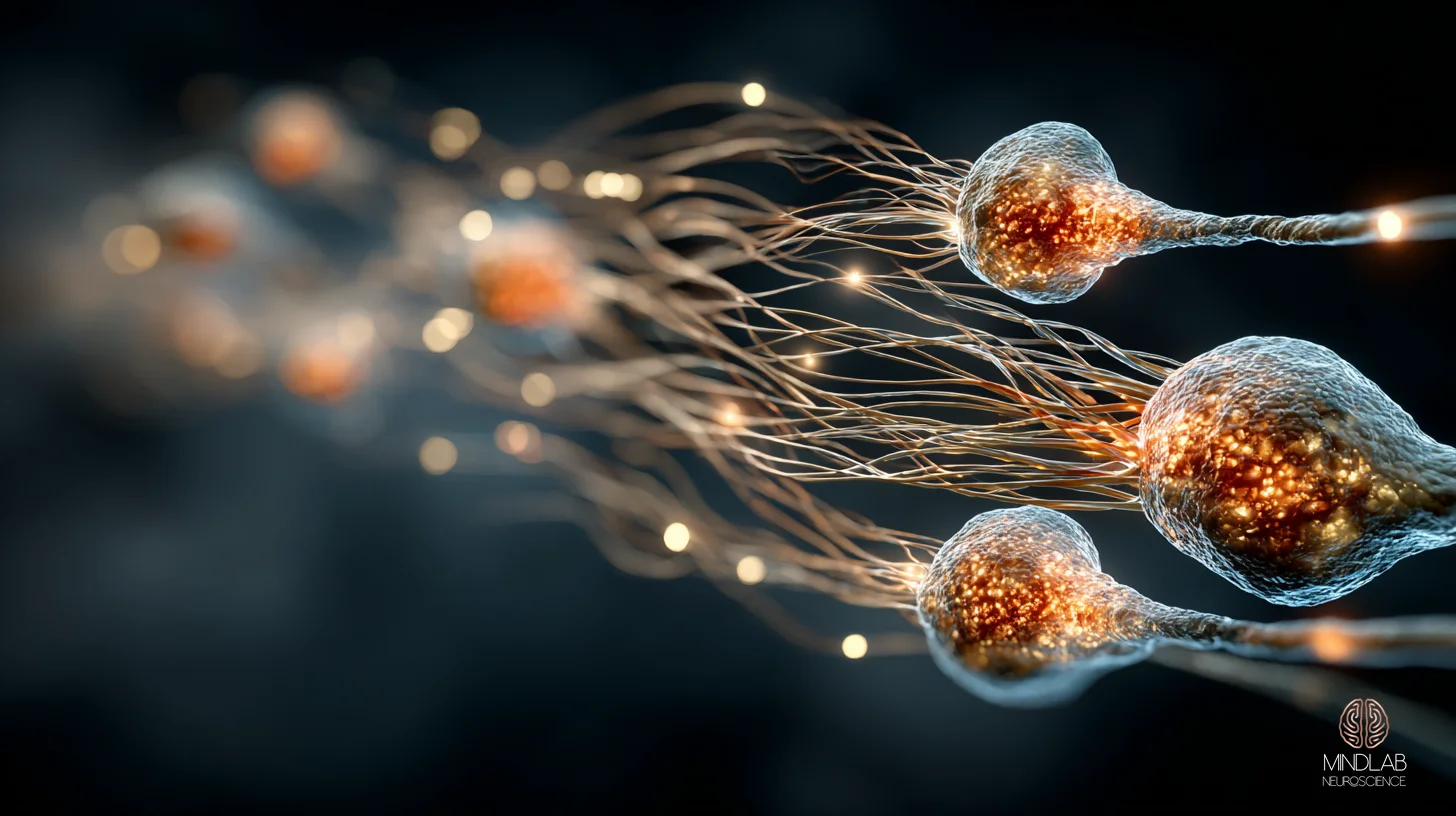 This is the predictive processing of threat at the network level. The brain is not malfunctioning when it replays the failure rather than the success. It is operating exactly as designed — for an environment that no longer exists in the form the architecture was tuned for. The loop is a feature reaching into a context that does not warrant it.
"Distraction temporarily suppresses DMN activity. The connectivity beneath does not change. As soon as the external stimulus releases attention, the loop resumes."
The intervention point remains the same: salience-network switching capacity. When the switch works, threat-tagged content arrives, gets evaluated, and disengages. When the switch fails, threat-tagged content arrives, gets evaluated, and stays — recycled through the DMN until the network is interrupted from outside.
References
Menon, V. (2023). 20 years of the default mode network: A review and synthesis. Neuron, 111(16), 2469-2487. https://doi.org/10.1016/j.neuron.2023.04.023
Kaiser, R. H., Andrews-Hanna, J. R., Wager, T. D., & Pizzagalli, D. A. (2015). Large-Scale Network Dysfunction in Major Depressive Disorder. JAMA Psychiatry, 72(6), 603-611. https://doi.org/10.1001/jamapsychiatry.2015.0071
Whitfield-Gabrieli, S., & Ford, J. M. (2012). Default Mode Network Activity and Connectivity in Psychopathology. Annual Review of Clinical Psychology, 8, 49-76. https://doi.org/10.1146/annurev-clinpsy-032511-143049
Bratman, G. N., Hamilton, J. P., Hahn, K. S., Daily, G. C., & Gross, J. J. (2015). Nature experience reduces rumination and subgenual prefrontal cortex activation. Proceedings of the National Academy of Sciences, 112(28), 8567-8572. https://doi.org/10.1073/pnas.1510459112
What the First Conversation Looks Like
When someone reaches out to MindLAB Neuroscience because the loops will not stop, the first conversation is not a symptom inventory. I want to understand the live moment — the precise context in which the network is actively running, the specific trigger architecture, the way the loop closes and what tries to break it. The science of default mode network rumination tells us where the rewiring point sits. The work itself happens in the moment the network is running, and that requires being present with you in those moments — not after they have resolved. That is what the partnership is. We do not interpret rumination retrospectively. We meet the network where it lives.
Frequently Asked Questions
⚙ Content Engine QA
Meta Drafts
• Title tag: Default Mode Network Rumination | Dr. Sydney Ceruto (51 chars)
• Meta description: Why your brain replays emotional events: the neuroscience of default mode network rumination, sgPFC hyperconnectivity, and why distraction fails. (146 chars)
• Primary keyword: default mode network rumination
Image Specs
• Slot 1: hero — neural-scientific, 16:9, after-h1 — atmospheric DMN architecture rendering
• Slot 2: infographic — diagrammatic, 16:9, mid-body — three-network interaction (DMN ↔ Salience ↔ FPN) with switching arrows
• Slot 3: lifestyle editorial — lifestyle, 16:9, emotional-pivot — single anchor lifestyle scene per /lifestyle-editorial skill
• Slot 4: neural close-up — neural-scientific, 3:4, half-width-offset — sgPFC integration node intimate detail
• Slot 5: neural scientific — neural-scientific, 16:9, penultimate-body-h2 — DMN-amygdala coupling pathway
Self-Assessment
• Information Gain: 7/10 — Strategy 2 (Clinical Pattern Observations): names the salience-network switching layer as the actual rewiring target, not the DMN itself, and pairs this with a non-corporate composite observation of how the loop runs across personas.
• Clinical Voice: 7/10 — first-person practitioner voice in §1 ("In my practice, I consistently observe..."), composite client framings rather than diagnostic posture.
• Commodity Risk: 3/10 — pivots from "what is the DMN" toward switching-layer mechanism + Real-Time Neuroplasticity™ live-moment intervention; an AI search would not synthesize the salience-network-as-rewiring-target framing.
• Content Type: Tier 1 — Network Neuroscience Explainer with Clinical Application
Audit Notes
• Citations: 7 total — 3 inline (Hamilton 2015, Goulden 2014, Sheline 2009), 4 in accordion (Menon 2023, Kaiser JAMA 2015, Whitfield-Gabrieli 2012, Bratman 2015). All seven verified against fact pack at W:/sessions/blog-default-mode-network-rumination-factpack.md. Inline-only papers (Hamilton, Goulden, Sheline) excluded from accordion per MR §2.2 overflow rule.
• 2021+ source: Menon 2023 (Neuron).
• Tier 2 academic: All seven citations are Tier 2 (Biological Psychiatry, PNAS, Neuron, JAMA Psychiatry, Annual Review, NeuroImage).
• Vocabulary: No forbidden vocabulary in body. "Disorders" rewritten to "behavioral patterns" per CIP §2.1. "Clinical" used only in citation paraphrase ("Clinical Neuroscience" as proper noun in title of Hamilton 2015) — degree-name/proper-noun exemption.
• Samantha Protocol: Three composite contexts in H2 #2 (career setback, family inheritance decision, partner with aging parent) span Personas A, B, C. Persona C non-corporate composite in H2 #3 (partner with aging parent + streaming app).
• Entity name: "MindLAB Neuroscience" first-mention full form (CTA section); "MindLAB" subsequent. "Dr. Sydney Ceruto" in author byline.
• Tail order: body → References accordion → CTA-BRIDGE marker → CTA narrative → FAQ → QA section. Confirmed.
• Pillar 5 silo: Depression mentioned in H2 #4 mechanism without linking to /depression-motivational-drive/ or any Pillar 5 hub. Silo enforced.
• Protocol: Emotional Regulation Reset Protocol named once (H2 #3). RTN named once, paired with salience-network flexibility (H2 #3) — MR §7.5 single-mention rule satisfied.
• Pull quotes: 2 (H2 #2, H2 #5) — meets 2,500+w threshold preemptively given target band.
• Internal links: Per CIP §11.3, no internal links added by writer. Anchor phrases for editorial pass embedded — "salience-network switching" (target: why-am-i-so-easily-distracted [pending publication]), "granularity of emotional experience" (target: emotional-granularity [pending publication]), "predictive processing of threat" (target: predictive-processing-anxiety [pending publication]). All three same-pillar / adjacent-hub.
Review Flags
• Pillar-numbering carry-forward: Source-brief framing labels Cognitive Architecture as P2; canonical taxonomy v2.1 labels it Pillar 1. Frontmatter uses pillar slug only (no number encoded). Same precedent as cant-focus-under-pressure.
• Tag registry: "Subgenual Prefrontal Cortex" and "Self-Referential Processing" tags pending Marc-approval at WordPress taxonomy level. Alternates documented in brief §2.4 (Salience Network as Hardware substitute; DMN Hyperconnectivity as Symptom substitute).
• Internal-link anchor targets pending publication: Three same-pillar / adjacent-hub anchor candidates (emotional-granularity, predictive-processing-anxiety, why-am-i-so-easily-distracted) currently 404 on production HEAD. Editorial pass will resolve once publication lands; no rewrites needed for clean linking.