What Is Cognitive Reserve and How Do High Performers Build It? A Neuroscience Framework
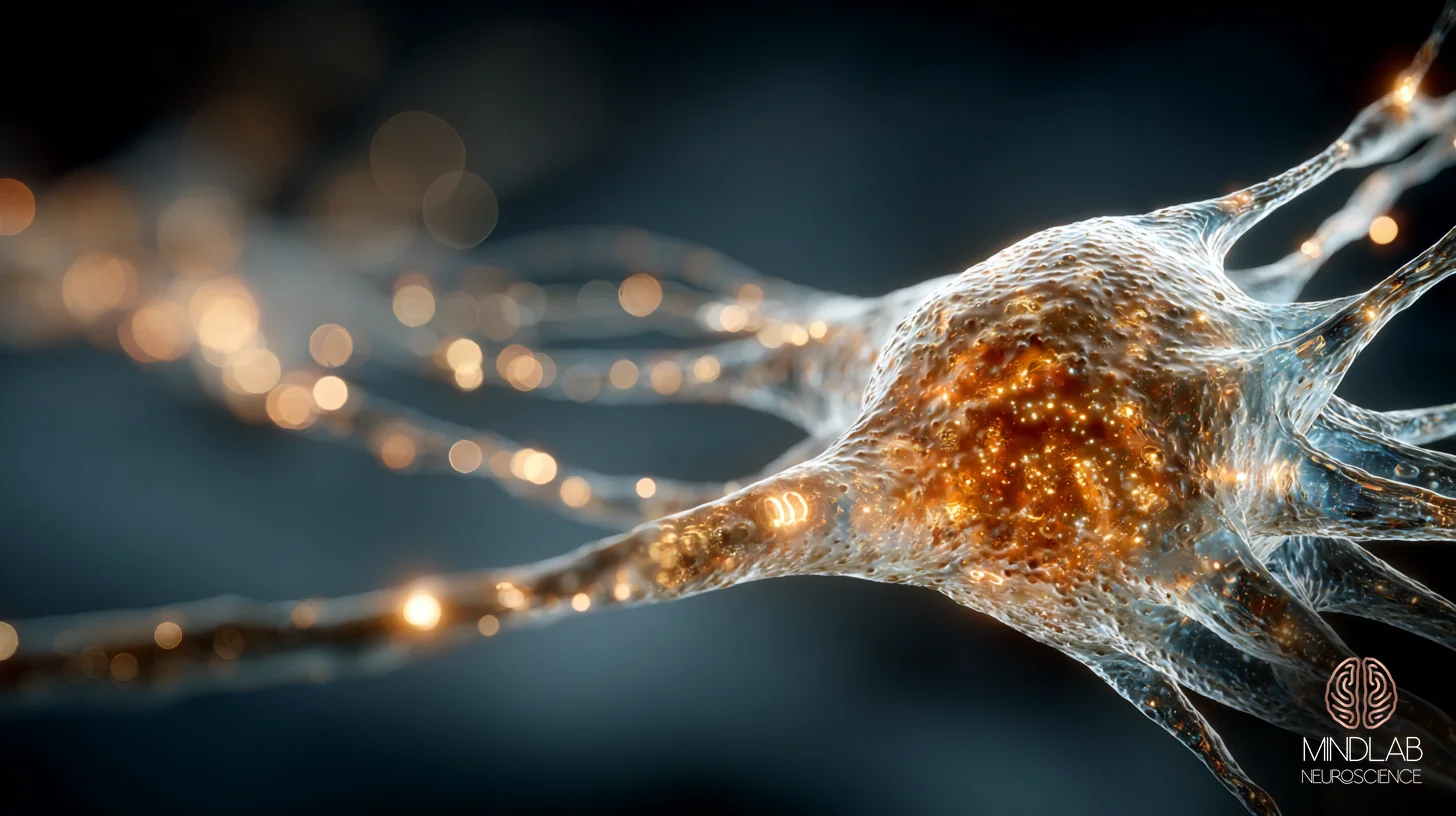
Cognitive reserve is the brain’s capacity to sustain function under neural stress by recruiting alternative networks when primary ones degrade. It is built cumulatively over a lifetime through education, occupational complexity, and cognitively demanding leisure — and measured structurally via cortical thickness, hippocampal volume, and white-matter integrity preserved into late life.
Key Takeaways
- Cognitive reserve splits into neural reserve (pre-existing network efficiency) and neural compensation (alternative-network recruitment under load).
- The canonical proxy set is education × occupational complexity × leisure engagement — each dimension contributes independently and interactively.
- Structural reserve is measurable: cortical thickness preservation, hippocampal volume, and white-matter integrity serve as biomarker milestones.
- Adulthood builds reserve primarily through occupational complexity and leisure engagement — additional formal education after young adulthood contributes marginally.
- Reserve does not prevent Alzheimer pathology; it raises the threshold at which pathology translates into functional impairment.
What does it mean to build cognitive reserve?
Building cognitive reserve means investing — across decades — in the structural and functional capacity that lets the brain absorb age-related and pathology-related insults without losing performance. Two distinct mechanisms are involved: neural reserve, the efficiency of pre-existing networks, and neural compensation, the recruitment of alternative networks when primary ones falter.
The distinction matters because the levers are different. Neural reserve is the capacity already wired in — the depth of the cortical infrastructure a person carries into middle age. Neural compensation is the dynamic process by which the brain reroutes function through secondary circuits when the primary task-positive networks degrade. The foundational research by Stern (2009) formalized this two-axis model and remains the canonical reference for the field.
In my work with clients in their late forties and fifties — the burnt-out executive composite I see most often — the presenting complaint is rarely “decline.” It is the felt experience of compensation under sustained load. The decisions still get made. The meetings still close. But the cost has risen, because the brain is now drawing on its compensation buffer rather than running primary networks at low effort. Stern’s 2012 update extended this framework into the dementia literature, and Reuter-Lorenz and Park’s scaffolding theory of aging and cognition (2014) gave it the neuroimaging backbone — alternative networks visible in fMRI data, recruited in response to neural challenge.
A separate hypothesis runs alongside reserve: brain maintenance. Arenaza-Urquijo and Vemuri (2018) distinguished resistance to pathology (avoiding the disease in the first place) from resilience (coping with pathology once it arrives). Reserve sits on the resilience side of that line. The Pereira et al. (2021) integrative review brought the two threads together, framing reserve as a buffer expressed through more efficient utilization or through the recruitment of additional brain regions.
What activities build cognitive reserves?
The canonical activity set is the three-component education × occupational complexity × leisure engagement equation. Each dimension contributes independently and the three interact — meaning a high score on any one component partially compensates for lower scores elsewhere, but maximum reserve comes from sustained engagement across all three.
Education provides the early-life foundation: the years of formal schooling that establish baseline cortical thickness and the cognitive skills the brain will deploy for the next sixty years. Occupational complexity — particularly the complexity-with-people component — extends that foundation across the working life. The Coleman et al. (2023) longitudinal analysis in Alzheimer’s & Dementia found that a one-standard-deviation increase in person-centered occupational complexity was associated with a 9–12% reduction in MCI/dementia probability, with the effect mediated through brain reserve operationalized as the cognition-versus-MRI-atrophy residual.
Leisure engagement carries weight that consumer-grade health writing routinely underestimates. The Xu et al. (2019) lifespan composite study in JAMA Neurology showed that the combined education-plus-occupation-plus-late-life-leisure index reduces dementia risk even in the presence of measurable brain pathology. The combination — not any single activity — is what moves the dependent variable.
Two nuances deserve naming. First, the Persona A reframe: an individual building reserve at thirty does not need to wait until fifty to start the deposit cycle. Occupational complexity adopted in the early career compounds for forty years. Second, the Persona C reframe: complex relational and managerial labor counts. Coordinating a multi-generational family system, governing a charity board, and managing a sustained sabbatical decision tree are reserve-building activities under the equation. The Nelson et al. (2021) meta-analysis quantified the dementia-incidence reduction across all three proxies — education, occupation, leisure — confirming that the equation operates regardless of how the cognitive complexity is distributed across life domains.
A caveat the literature insists on: Kremen et al. (2019) demonstrated that early-adult general cognitive ability accounts for roughly 40% of late-midlife cognitive variance, while additional formal education layered on after that baseline contributes less than 1%. Education matters most when it is acquired during the years it is most plastic.

How do you increase cognitive reserve in adulthood?
Adulthood reserve-building works through occupational complexity and leisure engagement, not through additional formal education. The empirical base supports a multidomain approach: physical activity, cognitively demanding work, and structured social-and-leisure complexity together produce measurable structural change — cortical preservation, hippocampal stability, and white-matter integrity sustained into the seventh and eighth decades.
The most rigorous trial evidence is the FINGER study (Ngandu et al., 2015, The Lancet) — a two-year randomized controlled trial that combined diet, exercise, cognitive training, and vascular risk monitoring in at-risk older adults. The intervention arm produced a measurable cognitive advantage over the control arm across the two-year window. The 2024 Lancet standing-commission report on dementia prevention extended this evidence base, identifying fourteen modifiable midlife and late-life risk factors that operate through reserve and maintenance pathways.
Reserve is not a trait you have — it is a balance sheet you build, deposit by deposit, across decades.
Among single interventions, aerobic exercise is the most consistent. The Erickson et al. (2011) PNAS RCT showed that a moderate aerobic exercise program produced a 2% increase in anterior hippocampal volume in older adults — effectively reversing one to two years of age-related volumetric loss. That is structural reserve being built at fifty-five and sixty-five, not preserved from childhood.
The Lin et al. (2023) UK Biobank analysis of 5,004 adults aged 48–80 brought white-matter integrity into the picture. Diffusion measures (NODDI/DTI) of white-matter tract integrity correlated with cognitive performance, and reserve proxies moderated that relationship — meaning the protective effect of intact white matter was amplified in adults with higher reserve indicators. Cheng’s 2016 review in Current Psychiatry Reports drew the mechanistic distinction cleanly: physical activity preserves structural integrity (gray and white matter); cognitive activity preserves circuit plasticity. The two are complementary, not interchangeable.
The compound-interest framing is not a metaphor — it is the literal time-course of the underlying biology. The deposits made in the thirties compound through the forties and fifties, and the structural state at seventy reflects the integrated investment trajectory.
What is cognitive reserve in dementia?
In the dementia context, cognitive reserve is the buffer that determines how much Alzheimer pathology a brain can carry before functional impairment appears. Reserve does not prevent the underlying disease — amyloid and tau still accumulate — but it raises the threshold at which the pathology translates into measurable cognitive decline.
The Stern 2012 update in The Lancet Neurology anchored this framework in the Alzheimer literature, and the Nelson et al. (2021) systematic review and meta-analysis in Neuropsychology Review quantified the effect across the published evidence base. High reserve was associated with reduced dementia risk in the presence of Alzheimer neuropathology — a result that holds across multiple cohorts and proxy measures. The Xu et al. (2019) analysis in JAMA Neurology found that lifespan cognitive reserve indicators reduced dementia risk even when imaging or autopsy-confirmed brain pathology was present.
The implication for the burnt-out executive composite — the persona for whom dementia is the silent fear underneath the question — is architectural rather than pathological. The fear is usually not “do I have early Alzheimer’s.” The fear is “is this fatigue the start of the slope.” Reserve answers that question by reframing the timeline. Pathology, if it is going to arrive, arrives on a schedule that is largely independent of conscious effort. What is under conscious effort is the rate at which the buffer is being maintained — and that rate determines whether a given amount of future pathology produces no symptoms, mild symptoms, or functional decline.
The ACTIVE trial provides the longest-running training-arm evidence in the field. Rebok et al. (2014) reported the ten-year follow-up in the Journal of the American Geriatrics Society: reasoning and speed training produced durable cognitive ability gains a decade after the original intervention, and self-reported instrumental activities of daily living showed less decline across all training arms. The narrowness of the transfer is a key result — the gains were domain-specific (reasoning yes, memory no) — but the durability is the headline. Targeted cognitive training can move the dependent variable a decade out from the training window. The 2024 Lancet commission report (Livingston et al.) integrated these strands into a current-best evidence framework for dementia risk reduction.

Which activity supports adults’ cognitive reserve the most?
No single activity dominates the longitudinal data — but a defensible ranking emerges. Aerobic exercise produces the largest, most replicated structural effect (hippocampal volume, white-matter integrity). Person-centered occupational complexity carries the strongest mid-life effect on reserve. Targeted cognitive training produces durable but narrow domain-specific gains.
Aerobic exercise leads the structural-effect column because the Erickson et al. (2011) PNAS data are unusually clean: a randomized trial, an MRI-measured outcome, and a 2% hippocampal volume increase that effectively reverses one-to-two years of age-related loss. Cheng’s 2016 review reinforces the broader picture — physical activity, especially aerobic, preserves both gray and white matter while cognitive activity strengthens prefrontal circuit plasticity. The two interventions occupy different niches, and the highest-reserve trajectories combine them.
Person-centered occupational complexity carries the strongest mid-life evidence. The Coleman et al. (2023) finding — that complex work with people specifically improves episodic memory, promotes brain reserve, and reduces dementia risk — outperformed data-centered task complexity in the same cohort. The clinical implication is unambiguous: the reserve-building return on relational and managerial complexity is larger than the return on equivalent hours of analytic-but-non-social work.
In my practice I see the non-corporate version of this profile regularly: an individual managing a multi-generational family system, a charity board governance role, and a career sabbatical decision tree. Not a CEO. Not a founder. The cognitive load profile is, however, identical to the executive-archetype version of the question — because under the reserve framework, what matters is the cross-domain managerial complexity, not the title attached to it. This is what the Pereira et al. (2021) review captured by writing the equation as education-occupation-leisure rather than education-job-hobby.
Targeted cognitive training — the ACTIVE trial lineage — sits below aerobic exercise and occupational complexity in this ranking, but it earns its place through durability. The Rebok et al. (2014) ten-year follow-up showed that reasoning and speed training produced cognitive ability gains a decade after the original sessions, with less self-reported IADL decline. The transfer was narrow — reasoning and speed transferred, memory training did not — but the longevity of even narrow gains is meaningful at the population level.

How is cognitive reserve measured in the brain?
Cognitive reserve is measured through three converging biomarker families: cortical thickness preservation (especially in prefrontal and temporal regions), hippocampal volume, and white-matter integrity assessed via diffusion imaging. No single measure captures reserve on its own — the construct is by definition the gap between expected and observed cognitive performance given the underlying brain state.
Cortical thickness preservation is the most accessible structural proxy. Age-related cortical thinning is normative; the rate at which it occurs and the regions that resist it are heterogeneous. Higher-reserve trajectories show preferential thickness preservation in prefrontal and temporal cortex — the regions carrying executive function and memory. The Stern (2009) framework formalized this measurement axis as one of the two operational definitions of reserve.
Hippocampal volume earned a special place in the literature because it is both modifiable (Erickson et al., 2011, demonstrated 2% growth from a randomized exercise intervention) and predictive of memory outcomes across decades. The hippocampus is the structure most sensitive to age-related volume loss, the structure where Alzheimer pathology arrives earliest, and the structure most responsive to aerobic exercise — making it simultaneously a vulnerability marker and an intervention target.
White-matter integrity is the third axis and the most recently characterized. The Lin et al. (2023) UK Biobank analysis of 5,004 adults aged 48–80 used NODDI and DTI diffusion measures to quantify white-matter tract microstructure and showed that reserve proxies moderate the white-matter-to-cognition relationship. White matter is the wiring; intact wiring is the substrate that allows preserved cortical thickness and hippocampal volume to translate into preserved performance.
Coleman et al. (2023) operationalized brain reserve directly as the residual between observed cognition and expected cognition given MRI atrophy indicators — a definition that captures the construct’s central logic. Reserve is the gap. A person performing better than the brain state predicts has reserve being expressed; a person performing worse than the brain state predicts has reserve being depleted. This residual-based definition is the methodological backbone of the modern reserve literature.
What this means for your reserve-building over the next decade
The framework is not a checklist. It is a balance sheet — and the line items that matter most are the ones already running in the background of your week: the complexity of the cognitive load you carry, the structural condition of your cardiovascular system, the depth of the relational and managerial labor you are coordinating, and the consistency of the inputs that protect what you have already built. The next decade will build reserve at the rate at which you treat reserve-building as architectural rather than incidental — and that recalibration is precisely the work the first conversation begins.

References
Stern, Y. (2012). Cognitive reserve in ageing and Alzheimer’s disease. The Lancet Neurology, 11(11), 1006–1012. https://doi.org/10.1016/s1474-4422(12)70191-6
Reuter-Lorenz, P. A., & Park, D. C. (2014). How does it STAC up? Revisiting the scaffolding theory of aging and cognition. Neuropsychology Review, 24(3), 355–370. https://doi.org/10.1007/s11065-014-9270-9
Pereira, G. Á., Silva Nunes, M. V., Alzola, P., & Contador, I. (2021). Cognitive reserve and brain maintenance in aging and dementia: An integrative review. Applied Neuropsychology: Adult, 1–13. https://doi.org/10.1080/23279095.2021.1872079
Livingston, G., Huntley, J., Liu, K. Y., Costafreda, S. G., & Selbæk, G. (2024). Dementia prevention, intervention, and care: 2024 report of the Lancet standing Commission. The Lancet, 404(10452), 572–628. https://doi.org/10.1016/s0140-6736(24)01296-0
What the First Conversation Looks Like
When a client comes to me asking about cognitive reserve, the first conversation is not a lecture on cortical thickness. It is a careful read of where reserve is currently being built — and where it is being quietly depleted. I listen for the specific shape of the cognitive load: the executive in his early fifties carrying decision density without the recovery architecture; the partner in her forties coordinating a complex family system, a board, and a career inflection; the young professional in her early thirties wondering whether the deposit cycle has begun. The work proceeds from there. We map the existing reserve trajectory, identify the two or three levers with the largest mechanistic return, and design the engagement that uses Real-Time Neuroplasticity™ inside the live moments where compensation networks are being recruited. No generic protocol. The neuroscience your brain is telling us to work with.
Frequently Asked Questions
⚙ Content Engine QA
Meta Drafts
• Title Tag: Cognitive Reserve: How to Build It | MindLAB Neuroscience (56 chars)
• Meta Description: Cognitive reserve is the brain's neural compensation buffer. Learn how cortical thickness, hippocampal volume, and complexity build it for life. (144 chars)
• Primary Keyword: cognitive reserve
Image Notes
• Slot 1 (after-h1, hero, 16:9): neural-scientific lane / TTAPI Midjourney fast (imagine + upsample1) / concept N1 Vast Network Interior, Murano glass form, off-center with negative space, structural mid-range scale / Transparent logo bottom-right 140px / cortical-network architecture with warm copper neural pathways and a central recruitment nexus on deep navy void
• Slot 2 (after-h2-3, infographic, 16:9): diagrammatic lane / Atlas Cloud nano-banana-pro (Google Direct 429 → APIMart 403 → Atlas) / Three-Streams Confluence Ledger composition — education scroll + occupational copper cable + leisure root system → reserve-buffer reservoir with Pathology Threshold marker → biomarker output bar (cortical strata + caliper, hippocampal cylinder, white-matter diffusion sphere) along compound-interest temporal axis with four summary cards / Transparent logo top-right 112px
• Slot 3 (after-h2-4, editorial, 16:9): lifestyle lane / pending /blog-editorial Phase 2.5 (currently under temporary deferral override added 2026-04-30; IMAGE-SPEC and PENDING- filename remain intact for later processing) / no logo per editorial tier
• Slot 4 (inside-h2-6, neural-close-up, 3:4): neural-scientific lane / TTAPI Midjourney fast (imagine + upsample1) / concept N5 Precision Circuit, burnished metal form, directional beam light, centered macro composition, molecular cellular-architecture scale / Transparent logo bottom-right 140px / single cortical pyramidal neuron's dendritic arborization — differentiated from Slot 1 hero on concept, form, and scale
Self-Assessment
• Information Gain: 8/10 — Strategy 2 (Clinical Pattern Observations). The reframe from generic "stay active" advice to a measurable balance-sheet construct with biomarker milestones (cortical thickness, hippocampal volume, white-matter integrity) and the Persona C non-corporate composite both push past commodity coverage.
• Clinical Voice: 8/10 — first-person practitioner voice anchored by composite observations in H2-1 (burnt-out executive) and H2-5 (non-corporate complex-load profile); CTA narrative carries the same first-person register.
• Commodity Risk: 3/10 — neural-reserve-vs-neural-compensation framing, Coleman 2023 person-centered occupational-complexity finding, and the Kremen 2019 caveat on adult education are not Healthline territory; the residual-based brain-reserve definition is graduate-textbook material.
• Content Type: Tier 2 — Mechanism-and-Biomarker Framework Article
Audit Notes
• Citations: 2 inline (doi.org: Stern 2009 in H2-1, Lin 2023 in H2-6) + 4 accordion (Stern 2012, Reuter-Lorenz & Park 2014, Pereira 2021, Livingston 2024) = 6 total, under the 7 ceiling
• Named researchers (density): Stern (2009, 2012), Reuter-Lorenz & Park 2014, Arenaza-Urquijo & Vemuri 2018, Pereira 2021, Coleman 2023, Xu 2019, Nelson 2021, Kremen 2019, Ngandu/FINGER 2015, Livingston 2024, Erickson 2011, Lin 2023, Cheng 2016, Rebok/ACTIVE 2014 — 14 named researchers/studies across ~2,200 words (well above ≥1 per 500-word floor)
• Quantified metrics: 2% hippocampal volume increase (Erickson 2011), 9–12% MCI/dementia risk reduction per SD of person-centered complexity (Coleman 2023), 5,004 UK Biobank adults aged 48–80 (Lin 2023), 40% late-midlife cognitive variance attributed to early-adult ability (Kremen 2019), 1–2 years of age-related loss reversed (Erickson 2011), 2-year FINGER intervention window, 10-year ACTIVE follow-up (Rebok 2014), 14 modifiable risk factors (Livingston 2024) — well above ≥1 per 500-word floor
• Vocabulary: No forbidden terms (therapy, treatment, diagnosis, patient, coaching, wellness practitioner) in body
• Samantha Protocol: Persona A (young professional) addressed in H2-2 reframe and FAQ #1 ("too late at 40"); Persona B (burnt-out executive) addressed in H2-1 composite and H2-4 dementia framing; Persona C (overwhelmed partner) addressed in H2-2 (relational/managerial labor counts) and H2-5 non-corporate composite (multi-generational family system, charity board, career sabbatical) — all three personas present, ≥1 non-corporate example confirmed
• Entity name: MindLAB Neuroscience (capital LAB) used in image alt text and confirmed throughout; Dr. Sydney Ceruto spelled exactly
• Tail order: body H2 #6 → transitional H2 #7 → References accordion → CTA-BRIDGE → CTA narrative H2 → FAQ H2 → QA section
• RTN: One mention in CTA narrative with ™ and compensation-network-recruitment framing per brief §2.10; no three-mechanism boilerplate
• Pull quotes: 1 (H2-3, balance-sheet framing) — meets MR §5 requirement at sub-2,500 word length
• Internal links: 0 embedded per CIP §11.3; editorial pass will add same-hub targets — how-to-increase-bdnf-naturally [pending publication], how-to-improve-synaptic-plasticity [pending publication], mitochondrial-dysfunction-brain [pending publication], with glymphatic-system-and-sleep [pending publication] and neuroinflammation-symptoms-brain [pending publication] as overflow
• Protocol reference: No MindLAB Protocol™ named in body — RTN™ serves as the methodology anchor per brief §2.5; no force-fit invented; MR §8.3 invention-forbidden rule respected