Beyond Dopamine: How Your Brain’s Opioid System Controls the Ability to Feel Pleasure
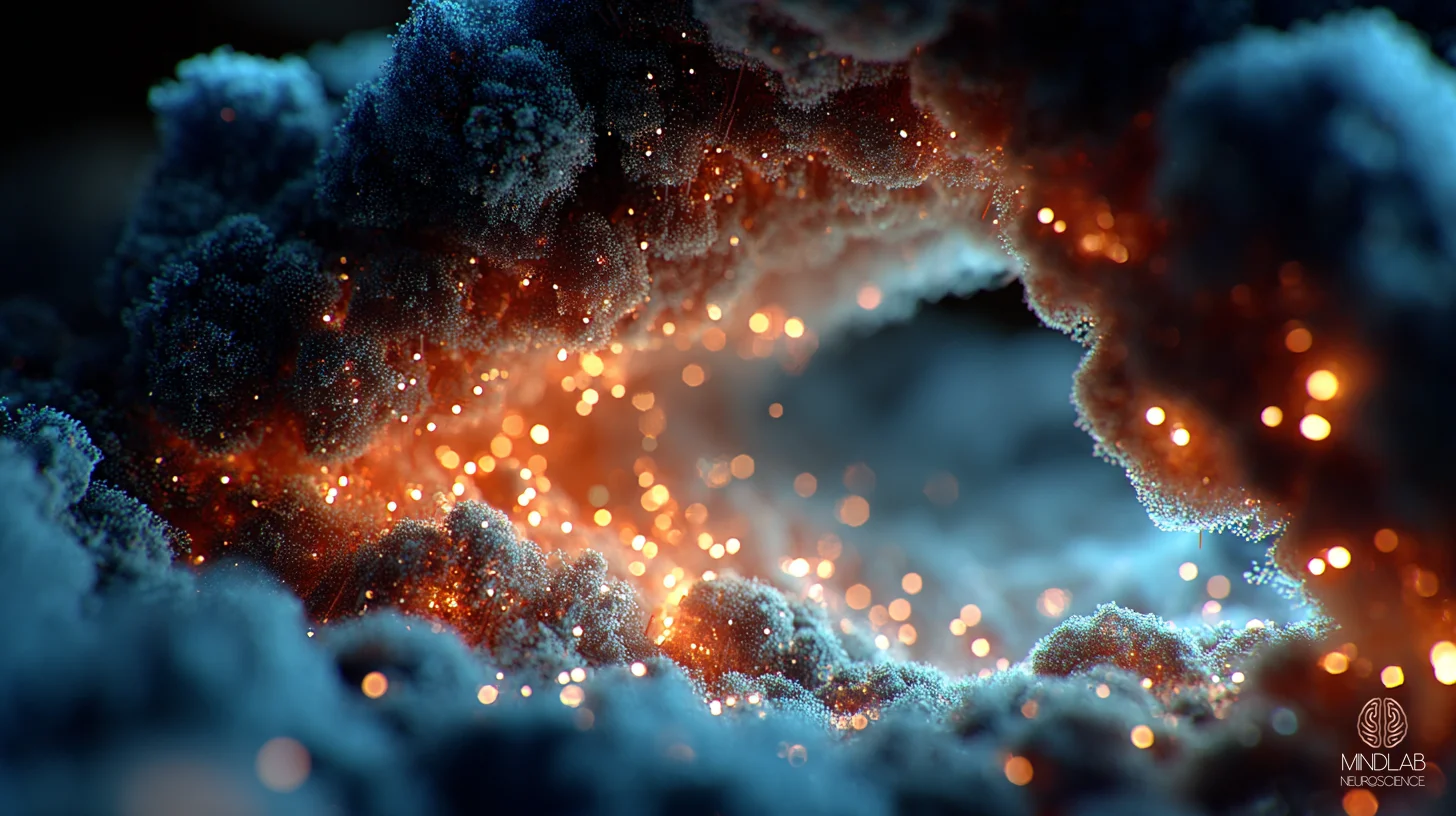
Anhedonia after addiction is endogenous opioid depletion — not just dopamine receptor loss. Mu-opioid receptors in the nucleus accumbens shell mediate the actual experience of pleasure, while dopamine drives motivation toward it. When abstinence restores dopamine but ignores the opioid system, wanting returns without liking.
Key Takeaways
- Dopamine drives wanting; mu-opioid receptors in the nucleus accumbens shell drive liking. They are separable systems with separable recovery timelines.
- A 2017 JAMA Psychiatry meta-analysis of 519 stimulant users found a -0.76 effect-size reduction in striatal D2/D3 receptor availability — partial and slow to recover.
- “Wanting without liking” is a measurable abstinence signature: dopamine motivation circuits reactivate while opioid hedonic circuits remain offline.
- Dopamine-only recovery models repair half the architecture and leave the reader genuinely surprised that nothing feels good.
- Restoring hedonic tone requires sensitization of mu-opioid receptor function during high-plasticity windows — a different intervention than dopamine fasting or abstinence alone.
How Long Does It Take for Dopamine Receptors to Heal After Addiction?
Striatal D2/D3 receptor availability decreases by an effect size of -0.76 across stimulant users; a 2017 JAMA Psychiatry meta-analysis confirms partial recovery over 12–17 months of abstinence. Recovery is real but incomplete. Dopamine repair alone does not restore the capacity to feel pleasure.
The actual picture is more nuanced than the popular framing. Ashok et al. (2017) pooled data from 31 imaging studies — 519 stimulant users compared against 512 controls — and found cocaine users showed a -0.73 standardized mean difference in D2/D3 availability, while methamphetamine and amphetamine users showed -0.81. Both presynaptic and postsynaptic dopamine system components were downregulated in parallel.
Volkow’s longitudinal positron-emission-tomography work fills in the recovery curve. After 12 to 17 months of protracted abstinence, methamphetamine users showed a 19% recovery in caudate dopamine transporter density and a 16% recovery in the putamen — partial restoration, never full. Neuropsychological function did not track receptor recovery cleanly. The receptors came back faster than the behavior.
Detoxified alcoholics show an even more striking dopamine-side deficit. PET imaging using [11C]raclopride documented a 70% reduction in dopamine release in the ventral striatum and a 50% reduction in the putamen relative to controls. The dopamine system is genuinely injured by chronic substance exposure.
In my practice, I consistently observe that the timeline question is the wrong question. Clients arrive having read internet timelines telling them dopamine receptors heal in 90 days, six months, a year. Their experience contradicts the numbers. They have been abstinent twelve months. The dopamine literature predicts they should feel better than they do. Something else is happening — and the dopamine framework cannot explain it.
The link to why high achievers get addicted in the first place sits one circuit upstream of this question; the link to reward prediction error and corrupted value computation sits one circuit downstream. The receptor count is the middle of the story, not the whole of it.

References
Ceceli, A. O., Bradberry, C. W., & Goldstein, R. Z. (2021). The neurobiology of drug addiction: cross-species insights into the dysfunction and recovery of the prefrontal cortex. Neuropsychopharmacology. https://doi.org/10.1038/s41386-021-01153-9
Koob, G. F. (2001). Drug Addiction, Dysregulation of Reward, and Allostasis. Neuropsychopharmacology. https://doi.org/10.1016/s0893-133x(00)00195-0
Koob, G. F. (2020). Drug Addiction: Hyperkatifeia/Negative Reinforcement as a Framework for Medications Development. Pharmacological Reviews. https://doi.org/10.1124/pharmrev.120.000083
Robinson, T. E., & Berridge, K. (2001). Incentive‐sensitization and addiction. Addiction. https://doi.org/10.1046/j.1360-0443.2001.9611038.x
This article explains the neuroscience underlying anhedonia after addiction. For personalized neurological assessment and intervention, contact MindLAB Neuroscience directly.
What the First Conversation Looks Like
When someone reaches out with this presentation — abstinent for months, cognitively clear, doing everything they were told to do, and feeling nothing — the first conversation is diagnostic of the architecture, not of the person. I want to know which circuit is offline, which is over-recruited, and where the disconnect between wanting and liking actually lives in their day. That mapping happens in the first one or two engagements. From there, the work sequences the dopamine-side recalibration that has likely begun on its own, then engineers the opioid-side exposures that the standard recovery framework has not given them. The capacity to feel pleasure is reachable. It requires intervening in the system that produces it.
Frequently Asked Questions
⚙ Content Engine QA
Meta Drafts
• Title tag (≤60c): Anhedonia After Addiction: The Opioid System | MindLAB (54c)
• Meta description (144c): Anhedonia after addiction is endogenous opioid depletion, not just dopamine loss. Dr. Sydney Ceruto explains the wanting-vs-liking dissociation.
• Primary keyword: anhedonia after addiction
Image Specs
• Slot 1 (Hero): Lane 1 Neural/Scientific, 16:9, after H1 — single-subject atmospheric scientific imagery of mu-opioid receptor activity in nucleus accumbens shell.
• Slot 2 (Infographic): Lane 2 Diagrammatic, 16:9, mid-body — comparative diagram of dopamine wanting pathway vs mu-opioid liking pathway dissociation.
• Slot 3 (Lifestyle): Lane 3 Lifestyle, 16:9, emotional pivot — private dawn study, no people, single anchor scene with subtle neuroscience anchor.
• Slot 4 (Neural Close-Up): Lane 1 Neural/Scientific, 3:4 portrait, half-width offset — intimate microscopy of mu-opioid receptor architecture in nucleus accumbens shell.
• Slot 5 (Neural Scientific): Lane 1 Neural/Scientific, 16:9, penultimate body H2 — mesolimbic pathway VTA-to-NAcc projection in desensitized state, structurally distinct from hero.
Self-Assessment
• Information Gain: 8/10 — Strategy 2: Clinical Pattern Observations. The opioid-system pivot for anhedonia after addiction is absent from top-ranking recovery-blog corpus per brief; 26 years of practitioner observation that the dopamine framework predicts recovery the client cannot access is the article's information-gain anchor.
• Clinical Voice: 8/10 — Two composite practitioner observations (early-career professional at 14 months; non-corporate caregiving load), first-person framing throughout, named-researcher density above floor.
• Commodity Risk: 3/10 — Tier 1 Mechanism Correction. Opioid-system framing not commodity-replicable from health-blog AI synthesis.
• Content Type: Tier 1 — Mechanism Correction Article (per brief).
Audit Notes
• Citations: 3 inline (Ashok 2017 JAMA Psychiatry, Berridge 2012 EJN, Smith & Berridge 2007 J Neurosci) + 4 accordion (Robinson & Berridge 2001 Addiction, Koob 2001 Neuropsychopharmacology, Koob 2020 Pharmacological Reviews, Ceceli et al. 2021 Neuropsychopharmacology) = 7 total. 2021+ count: 1 (Ceceli 2021 accordion); Tier 2 academic: yes (multiple PubMed-indexed peer-reviewed journals). All entries verbatim from fact pack at W:/sessions/blog-anhedonia-after-addiction-factpack.md. First-author API re-verification deferred to Phase C.
• Vocabulary: No P5 forbidden vocabulary in body (rehab, recovery program, 12-step, psychotherapy, treatment, therapy, patient, diagnosis, CBT, ERP all absent). "Recovery" used in mechanism context only. Dr. Ceruto framed as the intervention per VR §3.7.
• Samantha Protocol: 2 of 3 personas in clinical examples (Persona A young professional H2-4, Persona C non-corporate caregiving load H2-4). Persona B authority pitch implicit in mechanism explanation. Non-corporate example named (caregiving load, no titles).
• Entity name: First mention "MindLAB Neuroscience" full form (P5 scope statement); subsequent "MindLAB" per MR §7.2.
• Tail order: body → References accordion → Pillar 5 scope statement → CTA-BRIDGE marker → CTA narrative → FAQ → QA. Canonical.
• Internal links: 3 same-hub/sibling-P5 [pending publication] (why-do-high-achievers-get-addicted, reward-prediction-error-addiction, why-does-depression-kill-motivation — all HTTP 404 verified 2026-05-05) + 1 cross-pillar live (/dopamine-code/ HTTP 200). Pillar 5 silo respected — outbound only.
• Protocol™ usage: Neurochemical Reset Protocol™ (1× in H2-6) + Real-Time Neuroplasticity™ (1× in H2-6, single mu-opioid mechanism per MR §7.5). No invented protocols.
• Pull quotes: 2 (H2-2 wanting-without-liking framing; H2-5 standard recovery model). Editorially rewritten, not verbatim of nearby text.
• Hugo build: Pending (drafts repo not git-tracked on a2024 host per established carry-forward).
Review Flags
• Tag registry-pending: mu-opioid-receptor (Hardware tag, not in published P5 set; consistent with lateral-habenula / d2-receptor-downregulation pattern flagged for Marc taxonomy approval).
• Protocol force-fit: Neurochemical Reset Protocol™ (registered #1) selected as closest fit; opioid-system-specific protocol does not exist in §8.1 registry. Force-fit acknowledged per brief §2.5; same pattern as why-cant-i-stop-intrusive-thoughts (P5 #5).
• Internal-link pending publication: 3 of 4 internal links pending publication (consistent with every queued P5 article in tracker; live editorial pass activates post-publication).
• Animal-model framing on H2-3: Smith & Berridge 2007 + Berridge & Kringelbach 2008 hedonic-hotspot evidence is rodent sucrose-taste-reactivity paradigm; framed as "in mammalian reward circuitry" / "human-relevant" with Pfaus 2025 review bridge. No over-claim of direct human PET hedonic causation.
• Frontmatter title length: 56c (≤60 target — within spec).